
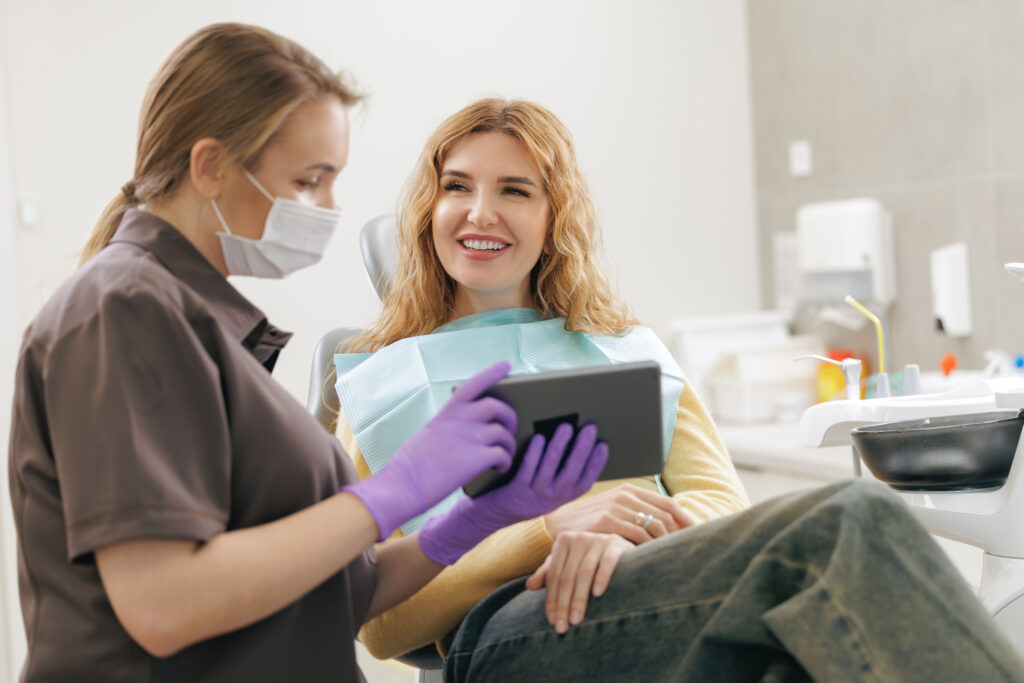
CAD/CAM technology represents a fundamental shift in restorative dentistry, replacing analog workflows with digital precision. This computer-aided system transforms how dental practices create crowns, bridges, and veneers through automated design and manufacturing processes. Clinical studies demonstrate superior marginal fit and reduced chair time compared to conventional methods. The integration of intraoral scanning, sophisticated software algorithms, and in-office milling units poses critical questions about treatment economics, clinical outcomes, and practice implementation strategies.
How CAD/CAM Technology Works in Dental Practices
When a patient requires a dental restoration, CAD/CAM technology transforms the traditional multi-appointment process into a streamlined digital workflow that can often be completed in a single visit. The process begins with intraoral scanning, capturing precise 3D images of the patient’s dentition within minutes. Advanced software then enables practitioners to design restorations with micron-level accuracy, manipulating virtual models to achieve ideal occlusion and anatomical contours.
The designed restoration data transfers directly to in-office milling units, which fabricate crowns, inlays, or veneers from ceramic blocks. This digital workflow eliminates conventional impressions, temporary restorations, and laboratory wait times. The patient experience improves considerably through reduced chair time and immediate restoration delivery. Clinical studies demonstrate that CAD/CAM restorations achieve marginal fits comparable to laboratory-fabricated alternatives while maintaining predictable outcomes.
Types of Dental Restorations Created With Cad/Cam
CAD/CAM technology enables the fabrication of multiple restoration types with unprecedented accuracy and efficiency in modern dental practices. The system produces full-coverage crowns and multi-unit bridges through digital milling or 3D printing, while conservative options include precisely fitted inlays and onlays that preserve maximum tooth structure. Additionally, CAD/CAM manufacturing creates ultra-thin veneers and laminates with margins as minimal as 0.3mm, achieving superior aesthetic outcomes through computer-controlled precision.
Crowns and Bridges
Among the most frequently produced restorations using CAD/CAM technology, crowns and bridges represent a significant advancement in fixed prosthodontics manufacturing. Digital workflows enable precise margin detection and ideal occlusal design, reducing chairside adjustment time by up to 60%. Zirconia crown options processed through CAD/CAM systems demonstrate fracture resistance exceeding 1,200 MPa, surpassing traditional porcelain-fused-to-metal alternatives.
Modern systems fabricate single-visit crowns with marginal gaps averaging 40-80 micrometers, meeting clinical acceptability standards. Hybrid dental bridges combining zirconia frameworks with lithium disilicate veneering achieve superior aesthetics while maintaining structural integrity. Multi-unit bridges spanning four units exhibit deflection rates below 0.3mm under functional loading. CAD/CAM technology facilitates immediate temporization and eliminates conventional impression materials, streamlining the restorative process while improving patient comfort and treatment predictability.
Inlays and Onlays
Numerous dental practices now utilize CAD/CAM technology to fabricate inlays and onlays with unprecedented accuracy, achieving internal adaptation values between 50-90 micrometers. These indirect restorations preserve more tooth structure compared to full-coverage crowns while providing superior strength to direct composite fillings.
Digital scanning eliminates traditional impression materials, reducing fabrication time from weeks to single appointments. Onlay preparation design benefits from CAD software’s ability to analyze cuspal coverage requirements and optimize margin placement based on biomechanical stress distribution. The technology guarantees uniform thickness parameters, preventing restoration failure points.
Contemporary CAD/CAM systems offer multiple material options, with lithium disilicate and zirconia-reinforced ceramics demonstrating exceptional inlay material durability. Clinical studies report 10-year survival rates exceeding 91% for CAD/CAM-fabricated inlays and 94% for onlays, with fracture resistance matching natural tooth structure under normal occlusal forces.
Veneers and Laminates
Digital fabrication extends beyond posterior restorations to anterior aesthetic applications, where veneers and laminates demand exceptional precision in thickness control and marginal adaptation. CAD/CAM technology enables clinicians to design porcelain veneers with minimal thickness variations of 0.3-0.5mm, ensuring ideal light transmission and natural aesthetics. The digital workflow eliminates conventional impression distortions, achieving marginal gaps below 50 microns.
Zirconia laminates represent an advancement in ultra-thin restorations, offering superior strength at 0.2mm thickness compared to traditional feldspathic ceramics. Computer-controlled milling maintains uniform material distribution, preventing stress concentration points that compromise longevity. Digital smile design integration allows precise customization of emergence profiles and surface textures. Same-day veneer fabrication reduces temporization requirements, minimizing enamel exposure and sensitivity. Clinical studies demonstrate 94% survival rates for CAD/CAM veneers at five years.
The Step-by-Step Process of Getting a CAD/CAM Restoration
When a patient requires a dental restoration using CAD/CAM technology, the procedure follows a standardized workflow that eliminates traditional impression materials and temporary restorations. The dentist first prepares the tooth, removing decay and shaping it for ideal restoration fit. An intraoral scanner captures digital impressions with scan accuracy reaching 20 micrometers, creating a three-dimensional model within minutes.
The software enables immediate restoration design, allowing real-time modifications based on occlusion and adjacent tooth morphology. The milling unit fabricates the restoration from ceramic blocks in approximately 10-15 minutes. After try-in and adjustment, the dentist bonds the restoration permanently. This single-visit approach reduces appointment duration to 60-90 minutes total, compared to multiple visits spanning weeks with conventional methods. The entire process demonstrates CAD/CAM’s efficiency in delivering precise, same-day restorations.
Benefits of Choosing CAD/CAM Over Traditional Methods
Several clinical advantages position CAD/CAM technology as superior to conventional restoration methods in modern dental practice. The most significant benefit remains the dramatically faster turnaround, enabling same-day crown delivery versus traditional two-week laboratory processing. Digital impressions eliminate messy impression materials while providing superior accuracy with marginal discrepancies below 50 micrometers.
Reduced chair time translates to enhanced patient satisfaction and practice efficiency. Single-appointment restorations eliminate temporary crown complications, including sensitivity, fractures, and emergency visits. The technology demonstrates exceptional material consistency through computer-controlled milling, producing restorations with predictable mechanical properties and longevity exceeding ten years according to longitudinal studies. Digital archives enable precise restoration reproduction when needed. Additionally, CAD/CAM systems reduce material waste by 65% compared to conventional casting methods, while offering expanded material options including zirconia, lithium disilicate, and hybrid ceramics.
What to Expect During Your CAD/CAM Appointment
The CAD/CAM appointment follows a streamlined digital workflow that eliminates traditional impression materials and multiple visits. Advanced intraoral scanners capture precise 3D tooth geometry within minutes, enabling immediate design and milling of restorations in the dental office. The complete process from digital scanning through crown fitting typically occurs within 60-90 minutes, with computer-guided precision ensuring ideal marginal adaptation and occlusal contacts.
Digital Tooth Scanning
During a CAD/CAM appointment, patients undergo digital tooth scanning through intraoral optical scanners that capture thousands of images per second to create precise three-dimensional models of dental anatomy. These devices utilize structured light or laser technology to map tooth surfaces with accuracy levels reaching 20 micrometers. The scanning process eliminates traditional impression materials, reducing patient discomfort and material-related errors.
Digital impressions obtained through chairside scanning integrate seamlessly with CAD software, enabling immediate restoration design. The procedure typically requires 3-5 minutes per arch, with real-time visualization allowing clinicians to identify and rescan inadequate areas instantly. Modern scanners feature powder-free technology and enhanced depth-of-field capabilities, improving workflow efficiency. This digital approach reduces remake rates by 68% compared to conventional methods while providing superior marginal fit accuracy for prosthetic restorations.
Same Day Results
When patients arrive for single-visit CAD/CAM restorations, the appointment follows a streamlined digital workflow that typically completes within 90-120 minutes for standard crown procedures. The dentist begins by preparing the tooth, removing decay and shaping the structure for suitable restoration fit. Digital scanning captures precise 3D tooth geometry, eliminating traditional impression materials. The CAD software enables real-time design modifications while patients wait, ensuring accurate margins and occlusal contacts.
Same day dental services leverage in-office milling units that fabricate restorations from ceramic blocks within 15-20 minutes. Following milling, the dentist performs characterization staining and glazing before final cementation. Immediate restoration completion eliminates temporary crowns, reducing bacterial infiltration risks and preserving tooth structure. Patients leave with permanently bonded restorations, avoiding multiple appointments and laboratory processing delays inherent in conventional protocols.
Crown Fitting Process
After tooth preparation and digital scanning complete, the crown fitting process integrates advanced software algorithms with clinical expertise to achieve ideal restoration outcomes. The CAD software analyzes occlusal relationships and proximal contacts while generating restoration parameters within 0.05mm tolerance levels.
Following design approval, milling units fabricate crowns from ceramic blocks in approximately fifteen minutes. The practitioner evaluates marginal adaptation, interproximal contacts, and occlusal harmony before final adjustments. Accurate impressions captured during initial scanning eliminate traditional impression materials, reducing potential distortion errors by 73%.
Efficient restoration placement occurs through precise adhesive bonding protocols. Clinicians apply silane coupling agents and resin cements, ensuring 25-30 MPa bond strength. Post-placement occlusal verification confirms proper articulation. This streamlined workflow reduces appointment duration from multiple visits to single two-hour sessions.
Cost Considerations and Insurance Coverage
While CAD/CAM technology represents a considerable capital investment for dental practices, ranging from $90,000 to $150,000 for complete chairside systems, the economic implications extend beyond initial acquisition costs. Operational expenses include software licenses, material blocks, and maintenance contracts averaging $15,000 annually.
Cost comparison to traditional methods reveals single-visit CAD/CAM restorations eliminate laboratory fees, reducing per-crown expenses by 30-40%. Patients typically pay $800-$1,500 for CAD/CAM crowns versus $1,200-$2,000 for conventional alternatives.
Dental insurance requirements vary remarkably among carriers. Most insurers reimburse CAD/CAM restorations identically to laboratory-fabricated prosthetics, using CDT codes D2740-D2799. However, same-day delivery doesn’t guarantee immediate coverage approval. Practices must verify pre-authorization protocols, as certain plans impose waiting periods regardless of fabrication method. Documentation requirements remain consistent, necessitating diagnostic radiographs and clinical photographs for claim substantiation.
Limitations and When Traditional Methods May Be Preferred
Three fundamental constraints limit CAD/CAM technology’s universal applicability in restorative dentistry, despite its technological sophistication. Material limitations restrict certain aesthetic outcomes, particularly in anterior zones requiring complex layering techniques that traditional ceramists achieve through manual stratification. Scanning accuracy diminishes in subgingival preparations exceeding 2mm depth, compromising marginal fit precision.
Complex rehabilitations involving vertical dimension changes or extensive occlusal reconstructions often necessitate traditional methods. Patient specific considerations include severe bruxism cases where metal-based restorations prove superior. Cost benefit analysis reveals traditional techniques remain advantageous for single-unit posterior restorations in practices with limited case volume.
Clinical scenarios favoring conventional approaches include provisionals requiring chairside adjustments, implant-supported full-arch prostheses demanding verification jigs, and cases requiring extended temporization periods where traditional materials offer better reparability and modification potential during treatment phases.
Finding the Right CAD/CAM-Equipped Dental Practice
When evaluating dental practices for CAD/CAM capabilities, patients should prioritize facilities demonstrating exhaustive digital integration beyond mere equipment presence. Advanced practices maintain multiple CAD/CAM systems, including intraoral scanners, milling units, and 3D printers, ensuring workflow redundancy and material versatility. Verification of technician certification and continuing education protocols indicates commitment to technological proficiency.
Practice reputation correlates directly with successful CAD/CAM implementation, measurable through restoration longevity data and same-day completion rates. Geographic considerations impact selection, as dental office location determines accessibility for multiple appointments if complications arise. Patients should request case documentation demonstrating ceramic, zirconia, and composite restoration outcomes. Facilities publishing peer-reviewed research or participating in manufacturer beta-testing programs typically maintain superior technical standards. Integration with digital radiography, cone-beam computed tomography, and practice management software indicates comprehensive digital architecture essential for best-in-class CAD/CAM utilization.
Frequently Asked Questions
How Long Do Cad/Cam Restorations Typically Last Compared to Traditional Ones?
Studies demonstrate the longevity of CAD/CAM restorations matches traditional restorations, typically lasting 10-15 years. Durability comparison reveals comparable success rates, with advanced ceramic materials and precision milling technology ensuring excellent clinical performance and structural integrity.
Can Cad/Cam Technology Be Used for Patients With Metal Allergies?
CAD/CAM technology offers excellent solutions for metal-allergic patients through biocompatible materials like zirconia and lithium disilicate ceramics. These metal-free alternative treatment options eliminate allergic reactions while providing superior aesthetics and durability through digitally-engineered precision manufacturing processes.
Are Cad/Cam Restorations Safe for Pregnant Women?
CAD/CAM restorations present minimal pregnancy safety considerations, utilizing digital impressions that eliminate radiation exposure concerns associated with traditional methods. Evidence-based protocols confirm biocompatible materials and innovative scanning technologies pose no documented risks to pregnant patients.
How Often Does Cad/Cam Equipment Need Maintenance or Calibration?
CAD/CAM systems require calibration every 6-12 months depending on equipment usage levels. Manufacturers recommend quarterly software update requirements and annual professional servicing. High-volume practices may need biannual calibration to maintain scanning accuracy and milling precision standards.
Can Existing Traditional Crowns Be Replaced With Cad/Cam Restorations?
Traditional crowns can be replaced with CAD/CAM restorations. Advantages of CAD/CAM crown replacement include single-visit procedures and precise digital fitting. Patient considerations for crown replacement involve evaluating existing crown condition, underlying tooth structure, and clinical indications for replacement.