
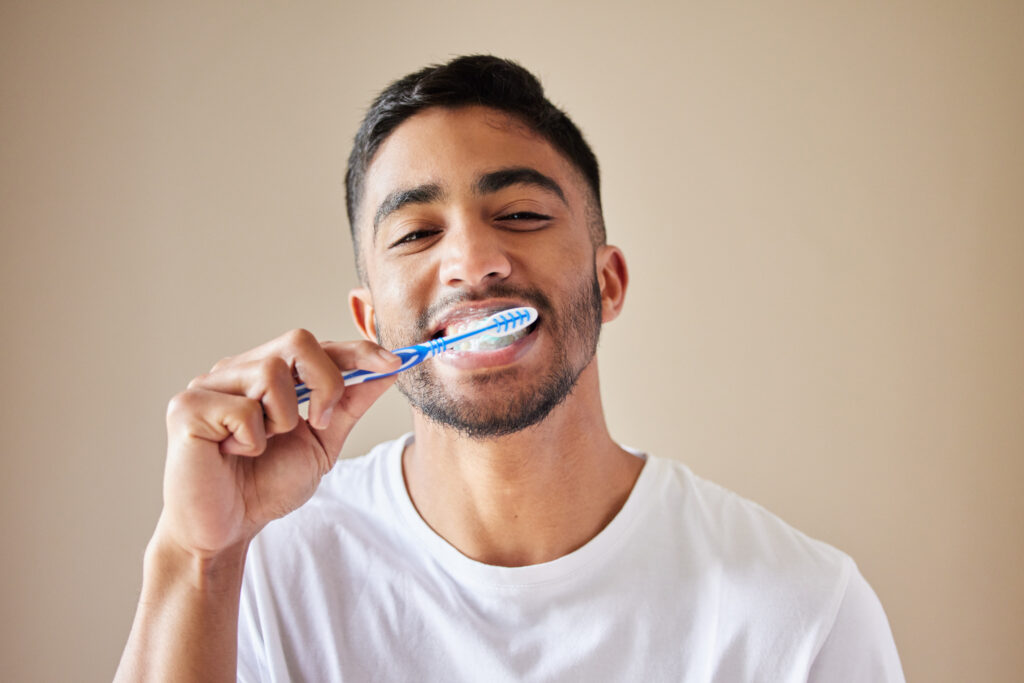
Effective oral hygiene necessitates age-appropriate techniques that develop throughout life. Research illustrates that proper brushing angles and flossing methods drastically lessen periodontal disease incidence by up to 40%. Each developmental stage presents unique challenges requiring specific adaptations. From teaching toddlers basic motor skills to addressing seniors’ dexterity limitations, evidence-based approaches guarantee optimal plaque removal. Comprehending these critical variations determines whether daily routines safeguard or inadvertently jeopardize dental health across the lifespan.
Essential Brushing Basics Every Person Should Master
While most individuals understand the importance of daily tooth brushing, research indicates that fewer than 30% of adults employ proper technique, leading to inadequate plaque removal and increased risk of periodontal disease. Sufficient brushing requires positioning the toothbrush at a proper brush angle of 45 degrees toward the gumline, allowing bristles to penetrate subgingival spaces where bacteria accumulate. Systematic cleaning should progress quadrant by quadrant using short, circular motions rather than horizontal scrubbing, which causes enamel abrasion and gingival recession.
Clinical studies demonstrate that adequate brushing time of two minutes minimum guarantees thorough biofilm disruption across all tooth surfaces. Practitioners recommend dividing the mouth into four sections, allocating 30 seconds per quadrant. Fluoride toothpaste enhances remineralization, while soft-bristled brushes prevent tissue trauma during twice-daily cleaning sessions.
Proper Flossing Methods That Actually Remove Plaque
Most dental professionals observe that patients struggle with effective flossing technique, resulting in incomplete interproximal plaque removal despite regular attempts at interdental cleaning. Effective floss threading techniques require wrapping 18 inches of floss around middle fingers, leaving two inches between hands for manipulation. Proper floss insertion angles involve guiding the floss gently between teeth using a rubbing motion, avoiding forceful snapping against gingival tissue.
Once positioned interproximally, the floss should form a C-shape against each tooth surface, sliding beneath the gingival margin at approximately 45 degrees. Vertical strokes should extend from the sulcus to the contact point, repeating 3-4 times per surface. Each interproximal space requires cleaning both mesial and distal surfaces. Advanced floss holders may benefit patients with limited dexterity, maintaining ideal angulation throughout the procedure.
Teaching Toddlers and Young Children Their First Oral Care Skills
Establishing oral hygiene habits during early childhood development requires age-appropriate instructional methods that accommodate limited motor skills and attention spans typical of toddlers aged 12-36 months. Parents should initiate supervised brushing sessions twice daily using soft-bristled, child-sized toothbrushes and fluoride toothpaste equivalent to a rice grain portion.
Making brushing fun through timer games, musical accompaniment, or reward charts enhances compliance rates dramatically. Research indicates children who participate in gamified oral care demonstrate 40% better plaque removal efficiency. Engaging children’s interest requires consistent positive reinforcement and modeling behaviors.
Caregivers should perform circular motions on all tooth surfaces for two minutes, gradually shifting responsibility as manual dexterity improves. By age three, children can attempt independent brushing under direct supervision, though parental assistance remains necessary until approximately age six.
Brushing and Flossing Strategies for Tweens and Teenagers
Orthodontic appliances require specialized cleaning techniques, including the use of interdental brushes, water flossers, and threader floss to remove plaque accumulation around brackets and wires. Adolescents demonstrate improved compliance with oral hygiene protocols when provided with age-appropriate education that emphasizes the social benefits of healthy teeth and fresh breath. Implementation of smartphone reminder applications and gamification of brushing routines has shown measurable increases in twice-daily brushing adherence among patients aged 11-17 years.
Braces Cleaning Methods
When orthodontic appliances are present, bacterial plaque accumulates more readily around brackets, wires, and bands, necessitating modified oral hygiene protocols to prevent demineralization and gingivitis. Orthodontic patients should employ specialized interdental brushes for effective braces wire cleaning, inserting bristles beneath archwires at 45-degree angles to dislodge debris. Electric toothbrushes with orthodontic-specific heads demonstrate superior plaque removal compared to manual brushing.
Floss threaders or orthodontic flossers facilitate interproximal cleaning by threading beneath wires. Water irrigators supplementally flush food particles from bracket surfaces, though they cannot replace mechanical plaque disruption. Following meals, adolescents must dedicate 4-5 minutes to thorough cleaning routines. While braces bracket removal occurs professionally, patients can dislodge ligatures accidentally through improper technique. Fluoride mouth rinses provide additional caries protection for compromised enamel surfaces surrounding fixed appliances.
Teen Motivation Tips
Adolescent compliance with oral hygiene protocols frequently declines during ages 11-18 due to developmental factors including autonomy-seeking behaviors, peer influence prioritization, and prefrontal cortex maturation affecting decision-making capabilities. Evidence-based interventions demonstrate improved adherence when incorporating intrinsic motivation strategies.
Behavioral modification techniques include making brushing fun through gamification apps tracking two-minute sessions, musical timers, or fluorescent disclosing tablets revealing plaque accumulation. Setting achievable goals utilizing SMART criteria—specific, measurable, attainable, relevant, time-bound—enhances compliance rates. Examples include “brush twice daily for one week” progressing to monthly objectives.
Positive reinforcement systems, choice provision regarding product selection, and linking oral hygiene to valued outcomes (fresh breath for social interactions, cavity prevention for avoiding dental procedures) demonstrate efficacy. Parent-adolescent contracts establishing clear expectations while respecting autonomy needs facilitate sustained behavioral change.
Adult Oral Hygiene Techniques for Optimal Dental Health
Although dental care fundamentals remain consistent throughout life, adults require specific modifications to their oral hygiene routines to address age-related changes in oral tissues, increased susceptibility to periodontal disease, and the cumulative effects of dietary and lifestyle factors. Effective dental plaque prevention necessitates brushing twice daily for two minutes using fluoridated toothpaste and soft-bristled brushes angled at 45 degrees toward the gumline. Adults should employ the modified Bass technique, utilizing gentle circular motions to disrupt biofilm formation without causing gingival recession.
Comprehensive gum disease management requires daily interproximal cleaning using waxed floss or water flossers, particularly for patients with wider embrasures or dental restorations. Antimicrobial mouth rinses containing chlorhexidine or essential oils provide adjunctive benefits when incorporated into established routines. Regular professional cleanings every six months remain essential for calculus removal.
Senior-Specific Approaches to Maintaining Clean Teeth and Gums
Older adults require modified oral hygiene techniques to accommodate age-related physical limitations and dental prosthetics. Ergonomic toothbrush handles with enlarged, non-slip grips enable individuals with arthritis or reduced dexterity to maintain proper brushing mechanics despite joint stiffness or decreased grip strength. Patients with removable dentures must implement specialized cleaning protocols, including daily brushing with denture-specific cleansers and overnight soaking in antimicrobial solutions to prevent bacterial colonization and oral infections.
Arthritis-Friendly Brush Grips
Many older adults experiencing arthritis or reduced grip strength require modified toothbrush handles to maintain effective oral hygiene routines. Ergonomic adaptations include foam tubing, tennis ball attachments, and custom-molded grips that increase handle diameter by 1-2 inches, reducing joint stress during brushing motions.
Commercial adaptive handles featuring non-slip rubber surfaces and contoured designs accommodate various arthritis presentations. Weighted handles minimize tremor effects, while angled necks reduce wrist flexion requirements. Electric toothbrush compatibility remains essential, as powered devices eliminate manual brushing movements while maintaining plaque removal efficacy.
Arthritis safe interdental cleaners include floss holders with extended handles and water flossers with grip-enhanced controls. Occupational therapists recommend trialing multiple grip configurations to identify suitable arrangements for individual joint limitations and dexterity levels.
Denture Care Basics
Approximately 26% of adults aged 65 and older have complete tooth loss requiring full denture prosthetics, necessitating specialized cleaning protocols distinct from natural dentition maintenance. Proper denture cleaning techniques mandate daily removal and mechanical cleansing using soft-bristled brushes specifically designed for prosthetic surfaces. Patients should avoid conventional toothpaste containing abrasives that compromise acrylic integrity.
Effective cleaning requires gentle scrubbing under running water, focusing on tissue-contacting surfaces where biofilm accumulates. Commercial denture cleansers provide antimicrobial action through alkaline peroxide or hypochlorite formulations. Overnight denture storage solutions maintain prosthetic hydration while preventing warpage and microbial proliferation. Dentures require immersion in water or specialized soaking solutions when not worn. Weekly deep cleaning with ultrasonic devices enhances plaque removal. Regular professional evaluation guarantees proper fit, preventing tissue irritation and bone resorption complications.
Adapting Your Routine for Braces, Implants, and Dental Work
When orthodontic appliances or dental restorations are present, standard oral hygiene protocols require modification to guarantee adequate plaque removal and prevent complications such as decalcification, peri-implantitis, or secondary caries. Patients with fixed orthodontic brackets should utilize interdental brushes, water flossers, and orthodontic-specific toothbrushes with V-shaped bristle configurations to access areas beneath archwires and around bracket peripheries.
Implant cleaning methods necessitate soft-bristled brushes and non-abrasive dentifrice to preserve titanium surface integrity while removing biofilm accumulation. Clinicians recommend twice-daily brushing with gentle circular motions at the gingival margin. Post procedure care routines following restorative treatment include chlorhexidine rinses for 7-14 days, modified brushing pressure around surgical sites, and graduated return to normal hygiene practices. Crown and bridge recipients should implement superfloss threading techniques and antimicrobial irrigation to maintain subgingival health.
Common Mistakes That Sabotage Your Daily Dental Care Efforts
Despite meticulous adherence to oral hygiene protocols, patients frequently compromise their dental health outcomes through systematic errors in technique, timing, and product selection. Improper brushing angles constitute a primary concern, with horizontal scrubbing motions causing enamel erosion and gingival recession. The ideal 45-degree angle toward the gumline remains consistently neglected.
Inadequate flossing frequency represents another critical failure, with sporadic implementation failing to disrupt bacterial biofilm formation. Daily interdental cleaning prevents periodontal disease progression, yet patients often abandon this practice following initial discomfort. Additional errors include excessive brushing pressure exceeding 150 grams, premature toothbrush replacement neglect beyond three months, and insufficient two-minute brushing duration. Rinsing immediately post-fluoride toothpaste application eliminates therapeutic benefits. These correctable mistakes substantially diminish preventive care efficacy and accelerate pathological processes.
Frequently Asked Questions
How Soon After Eating Acidic Foods Should I Wait Before Brushing?
Individuals should wait at least 30 minutes after consuming acidic foods before brushing. Acid temporarily softens tooth enamel, making it vulnerable to erosion. During this period, one must avoid abrasive brushing techniques to prevent irreversible damage.
Can Electric Toothbrushes Damage Tooth Enamel With Overuse?
Electric toothbrushes typically cannot damage enamel when users apply appropriate brush pressure adjustment and proper brushing technique variation. Excessive force remains the primary concern regardless of brush type. Built-in pressure sensors in modern devices prevent enamel abrasion.
Is Mouthwash Necessary if I Brush and Floss Correctly?
Mouthwash remains optional when individuals maintain ideal mechanical plaque removal through brushing and flossing. However, proper mouthwash selection enhances oral hygiene outcomes. A daily mouthwash routine provides antimicrobial benefits, reducing gingivitis and supplementing mechanical cleaning methods.
Should I Brush My Tongue and How Often?
Daily tongue cleaning remains clinically indicated. Research demonstrates tongue scraping effectiveness surpasses brushing for bacterial reduction. Proper tongue brushing duration requires 15-30 seconds, utilizing gentle posterior-to-anterior strokes. Practitioners recommend incorporating this practice into twice-daily oral hygiene routines.
What’s the Best Water Temperature for Rinsing After Brushing?
Lukewarm water temperature between 98-105°F proves ideal for post-brushing oral rinsing. Patients should utilize comfortable water temperature to effectively remove residual dentifrice while avoiding thermal sensitivity. Extreme temperatures may trigger dentinal hypersensitivity or compromise enamel integrity.