
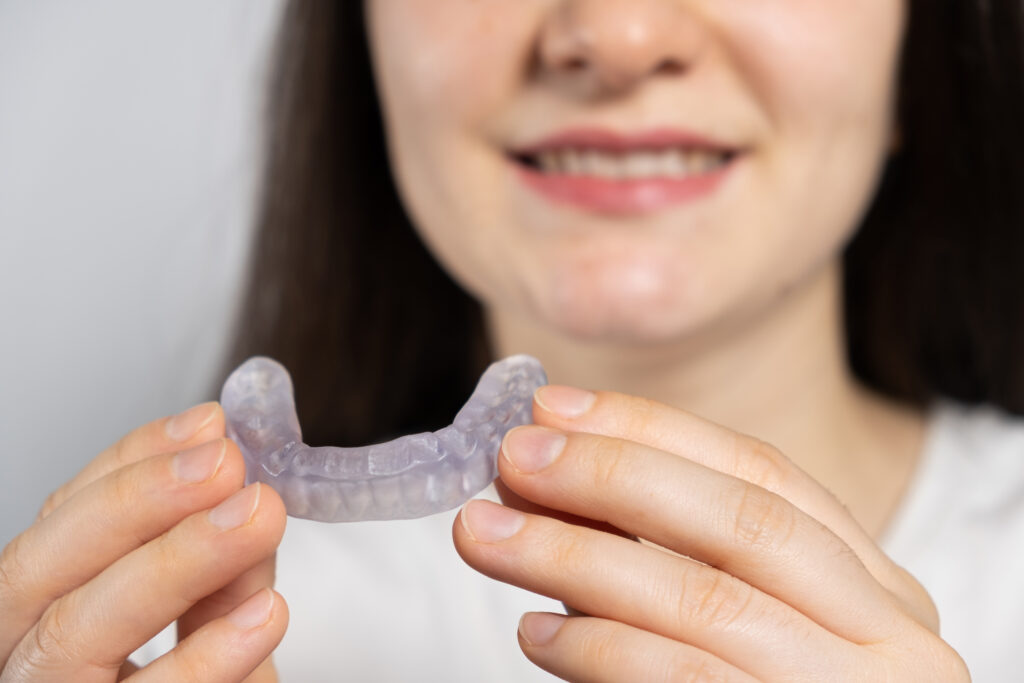
Nocturnal bruxism affects approximately 8-10% of adults, causing irreversible dental damage through unconscious grinding and clenching. Clinical studies demonstrate that untreated bruxism leads to enamel loss, temporomandibular joint disorders, and chronic orofacial pain. Custom-fabricated occlusal guards represent the gold standard intervention for managing these destructive forces. The distinction between professional and over-the-counter appliances proves critical for therapeutic success, yet most patients remain unaware of these significant differences.
Signs and Symptoms You’re Grinding Your Teeth at Night
While many individuals remain unaware of their nocturnal bruxism due to its occurrence during sleep, specific clinical indicators reveal the presence of this parafunctional activity. Primary symptoms include morning jaw soreness, temporomandibular joint dysfunction, and dental attrition patterns on occlusal surfaces. Patients frequently report tension headaches upon waking, facial muscle fatigue, and inadequate sleep quality resulting from disrupted sleep architecture.
Observable clinical signs encompass enamel fractures, tooth mobility, and hypertrophy of masseter muscles from excessive tooth clenching. Dental practitioners identify characteristic wear facets, particularly on canines and premolars, alongside gingival recession and cervical abfractions. Partners often report audible grinding sounds during the patient’s sleep cycles. Additional manifestations include tongue indentations, linea alba prominence on buccal mucosa, and increased tooth sensitivity to thermal stimuli.
The Hidden Dangers of Untreated Bruxism
When chronic bruxism persists without intervention, the cumulative effects extend beyond dental structures to encompass systemic complications affecting craniofacial anatomy and neuromuscular function. Progressive enamel erosion leads to dentin exposure, increasing susceptibility to caries and necessitating extensive restorative procedures. Temporomandibular joint degeneration manifests through articular disc displacement, synovial inflammation, and osseous remodeling, potentially resulting in permanent mandibular dysfunction.
Sleep apnea consequences emerge as bruxism-induced muscular hypertrophy obstructs upper airway patency during sleep. Research demonstrates bidirectional relationships between sleep-disordered breathing and nocturnal grinding episodes. Potential psychological impacts include heightened anxiety, depression prevalence, and diminished quality of life metrics. Neuroplasticity alterations perpetuate pain sensitization pathways, establishing chronic orofacial pain syndromes. Without therapeutic intervention, patients risk irreversible dentition damage, compromised masticatory efficiency, and persistent craniocervical dysfunction requiring multidisciplinary management.
How Custom Night Guards Differ From Store-Bought Options
Custom-fabricated night guards demonstrate measurable superiority over over-the-counter alternatives through three distinct clinical advantages. Laboratory-processed appliances utilize precise dental impressions captured by dental professionals, ensuring ideal occlusal relationships and uniform force distribution across the dentition. The medical-grade thermoplastic polymers and professional calibration of these devices provide enhanced durability and therapeutic efficacy compared to self-molded retail products.
Precise Dental Impressions
Professional dental impressions capture the unique anatomical contours of each patient’s dentition and surrounding oral structures with submillimeter accuracy, utilizing polyvinyl siloxane or alginate materials that record precise occlusal relationships and gingival margins. These accurate impressions enable laboratory technicians to fabricate appliances that distribute occlusal forces evenly across the dental arch.
Digital scanning technology has enhanced traditional dental mold techniques, providing three-dimensional mapping of tooth morphology and intermaxillary relationships. Clinicians evaluate vertical dimension, centric relation, and lateral excursive movements during the impression process. The resulting models preserve critical anatomical landmarks including cusp tips, fossa depths, and interproximal contacts.
This precision safeguards optimal retention, minimal tissue irritation, and therapeutic efficacy. Properly executed impressions reduce adjustment requirements and maximize patient compliance through superior fit and comfort.
Superior Material Quality
Beyond precision fit achieved through accurate impressions, the biocompatible materials used in laboratory-fabricated night guards demonstrate markedly different mechanical properties than over-the-counter alternatives. Professional-grade thermoplastics exhibit exceptional durability with tensile strength ratings exceeding 50 MPa, whereas retail thermoplastic variants typically measure below 20 MPa. This superior material composition resists fracture propagation and maintains structural integrity despite sustained occlusal forces reaching 200 pounds per square inch during severe bruxism episodes.
Laboratory-processed acrylic resins undergo controlled polymerization cycles, eliminating residual monomers that cause tissue irritation. The resulting appliances provide enhanced comfort through optimized thickness distribution and polished surfaces that minimize mucosal abrasion. Clinical studies indicate custom guards maintain therapeutic efficacy for 3-5 years, while store-bought alternatives require replacement within 6-12 months due to material degradation and dimensional instability.
Professional Fit Adjustments
While store-bought night guards offer limited modification capabilities, laboratory-fabricated appliances undergo systematic adjustment protocols performed by trained dental professionals to achieve ideal therapeutic outcomes. Dentists evaluate occlusal contacts through articulating paper markings, identifying premature contact points that compromise proper bite alignment. These assessments enable precise material reduction using specialized burs, ensuring balanced force distribution across posterior dentition.
Custom appliances accommodate frequent adjustments throughout treatment duration. Initial delivery appointments involve meticulous equilibration procedures, verifying vertical dimension preservation and lateral excursive movements. Subsequent evaluations address material wear patterns, TMJ symptomatology changes, and evolving dentition positions. Practitioners modify internal surfaces to accommodate dental restorations or orthodontic changes, maintaining therapeutic efficacy. This professional oversight distinguishes custom appliances from prefabricated alternatives, which lack adaptability to dynamic oral conditions requiring periodic recalibration.
The Professional Fitting Process and What to Expect
The professional fitting process for custom night guards follows a standardized clinical protocol consisting of three essential phases. The initial dental examination involves thorough assessment of occlusal patterns, temporomandibular joint function, and identification of bruxism-related pathology. Subsequent impression taking utilizing polyvinyl siloxane or alginate materials captures precise dental anatomy, followed by a final adjustment appointment where the fabricated appliance undergoes occlusal equilibration and retention verification.
Initial Dental Examination
When patients present with bruxism or temporomandibular joint dysfunction requiring occlusal splint therapy, the initial dental examination establishes the foundation for successful custom night guard fabrication. The clinician conducts thorough evaluation of occlusal relationships, documenting wear patterns, fracture lines, and mobility indices. Palpation of masticatory muscles identifies trigger points and asymmetric hypertrophy indicative of parafunctional activity.
The dental history reveals onset, frequency, and severity of symptoms, including morning jaw stiffness, headaches, and tooth sensitivity. Radiographic assessment determines condylar positioning and identifies pathological changes. Based on clinical findings, the practitioner formulates a treatment plan specifying appliance design parameters: coverage extent, occlusal scheme, and material selection. This systematic approach guarantees therapeutic objectives align with patient-specific biomechanical requirements, optimizing splint efficacy and compliance rates.
Impression Taking Steps
Impression-taking protocols for custom night guard fabrication require meticulous attention to material selection and technique execution to ascertain accurate replication of intraoral structures. Contemporary dental impressions utilize either traditional alginate or polyvinyl siloxane materials, each offering distinct viscosity properties and dimensional stability characteristics.
The impression techniques employed follow standardized procedural steps: tray selection based on arch dimensions, material preparation according to manufacturer specifications, and systematic insertion with controlled seating pressure. Clinicians must guarantee complete coverage of occlusal surfaces, interproximal areas, and gingival margins while minimizing patient discomfort.
Post-impression protocols include immediate inspection for voids, tears, or distortions that compromise accuracy. Stone models poured from acceptable impressions undergo verification measurements before laboratory fabrication commences. Digital scanning technologies represent an alternative methodology, eliminating conventional impression materials while maintaining requisite precision standards.
Final Adjustment Appointment
Following successful laboratory fabrication from verified impressions, patients return for the final adjustment appointment where precise occlusal calibration and appliance modification procedures guarantee favorable therapeutic outcomes. The final appointment overview encompasses systematic evaluation protocols including insertion resistance assessment, retention verification, and occlusal contact analysis using articulating paper. Practitioners perform customized adjustments through selective grinding techniques, ensuring uniform force distribution across dentition while eliminating premature contact points that compromise appliance stability.
Border extensions undergo refinement to prevent soft tissue impingement, while internal surfaces receive selective relief in areas of excessive pressure. Clinicians verify proper vertical dimension maintenance and confirm absence of mandibular deviation upon closure. Patient instruction includes insertion/removal techniques, hygiene protocols, and wear schedules. Post-adjustment evaluation confirms comfortable fit, appropriate retention, and functional occlusion before discharge.
Medical Conditions That Increase Your Need for a Night Guard
Certain medical conditions markedly elevate the risk of bruxism and subsequent dental damage, necessitating protective intervention through custom night guards. Patients with sleep apnea complications demonstrate extensively higher rates of nocturnal grinding, as airway obstruction triggers compensatory jaw movements. Research indicates that 25-40% of sleep apnea patients exhibit concurrent bruxism.
Chronic pain disorders, particularly fibromyalgia and temporomandibular joint dysfunction, correlate strongly with increased clenching behavior. Neurological conditions including Parkinson’s disease and Huntington’s disease alter motor control pathways, resulting in involuntary jaw movements. Gastroesophageal reflux disease (GERD) doubles bruxism incidence through acid-mediated arousal responses.
Psychiatric medications, specifically SSRIs and SNRIs, induce secondary bruxism in 24% of patients. These conditions warrant immediate evaluation for custom night guard fabrication to prevent irreversible dental deterioration.
Long-Term Benefits Beyond Protecting Your Teeth
While dental preservation remains the primary indication for custom night guard therapy, mounting clinical evidence demonstrates considerable systemic benefits extending far beyond tooth protection. Patients consistently report improved sleep quality following proper appliance implementation, with polysomnographic studies confirming decreased arousal episodes and enhanced REM sleep continuity. The biomechanical realignment achieved through mandibular repositioning significantly reduces neck tension, alleviating cervicogenic headaches and trapezius muscle strain.
Furthermore, therapeutic occlusal splints demonstrate measurable reductions in temporomandibular joint inflammation markers and associated otic symptoms including tinnitus and vertigo. Neurological benefits include decreased trigeminal nerve sensitization and reduced sympathetic nervous system activation. Long-term compliance correlates with improved cognitive performance metrics, likely secondary to enhanced sleep architecture and reduced chronic pain burden, establishing night guards as extensive therapeutic interventions rather than merely protective devices.
Cost Analysis: Prevention Versus Future Dental Repairs
The economic implications of untreated bruxism present a compelling financial argument for preventive night guard intervention. Statistical analysis demonstrates that chronic teeth grinding necessitates extensive restorative procedures averaging $5,000-$15,000 per patient over ten years. Comparatively, custom night guards represent cost effective prevention at approximately $300-$600, with replacement intervals of 3-5 years.
Financial implications extend beyond immediate dental repairs. Untreated bruxism correlates with temporomandibular joint dysfunction requiring specialist intervention ($3,000-$7,000), crown replacements ($1,200-$2,500 per tooth), and potential implant procedures ($3,000-$4,500). Insurance coverage typically allocates 80% reimbursement for preventive appliances versus 50% for major restorative work.
Clinical data indicates patients utilizing night guards demonstrate 73% reduction in subsequent restorative treatment costs. This preventive investment yields average savings of $8,000-$12,000 over fifteen years, establishing clear economic justification for early intervention.
Caring for Your Custom Night Guard and Maximizing Its Lifespan
Proper maintenance protocols greatly influence custom night guard longevity, with systematic care extending appliance functionality from standard 3-year lifespans to 5-7 years. Daily cleaning habits require immediate post-use rinsing with cool water, followed by brushing with non-abrasive toothpaste or specialized denture cleaners. Weekly deep sanitization using denture-cleaning tablets eliminates bacterial colonization and prevents material degradation.
Proper storage techniques mandate ventilated cases that facilitate complete drying between uses, preventing microbial proliferation and polymer breakdown. Exposure to heat sources, including hot water or direct sunlight, causes thermoplastic deformation and compromises structural integrity. Regular professional inspection during dental appointments identifies early wear patterns requiring adjustment or replacement. Patients should monitor for visible cracks, thinning areas, or altered fit, as these indicators necessitate immediate professional evaluation to maintain therapeutic efficacy.
Frequently Asked Questions
Can I Wear a Night Guard if I Have Dental Implants or Crowns?
Patients with dental restorations can safely wear night guards. Dental implant compatibility remains excellent as guards protect against excessive forces. Crown durability actually improves with proper guard usage, reducing wear and preventing ceramic fractures during nocturnal bruxism episodes.
How Long Does It Take to Adjust to Sleeping With a Night Guard?
Most patients achieve comfort level adjusting within 7-14 days of consistent nightly wear. Initial sleep quality changes typically resolve after the first week as oral tissues adapt to the appliance’s presence during mandibular rest positions.
Will My Dental Insurance Cover the Cost of a Custom Night Guard?
Dental insurance coverage options for custom night guards vary considerably between providers. Most plans classify occlusal guards as preventive or major restorative treatment, typically covering 50-80% of costs. Patients should verify benefits to determine out of pocket costs.
Can Children or Teenagers Use Custom Night Guards for Teeth Grinding?
Pediatric bruxism management typically requires specialized assessment before prescribing custom appliances. Teenage teeth grinding solutions may include custom guards following permanent dentition completion. Clinicians must evaluate growth patterns, ensuring proper occlusal development before implementing therapeutic interventions.
Is It Safe to Wear a Night Guard With Sleep Apnea or Snoring Issues?
Patients with sleep apnea should consult physicians before using night guards. Dental appliance compatibility requires professional evaluation, as certain designs may exacerbate nighttime breathing concerns. Mandibular advancement devices specifically address both bruxism and airway obstruction simultaneously.