
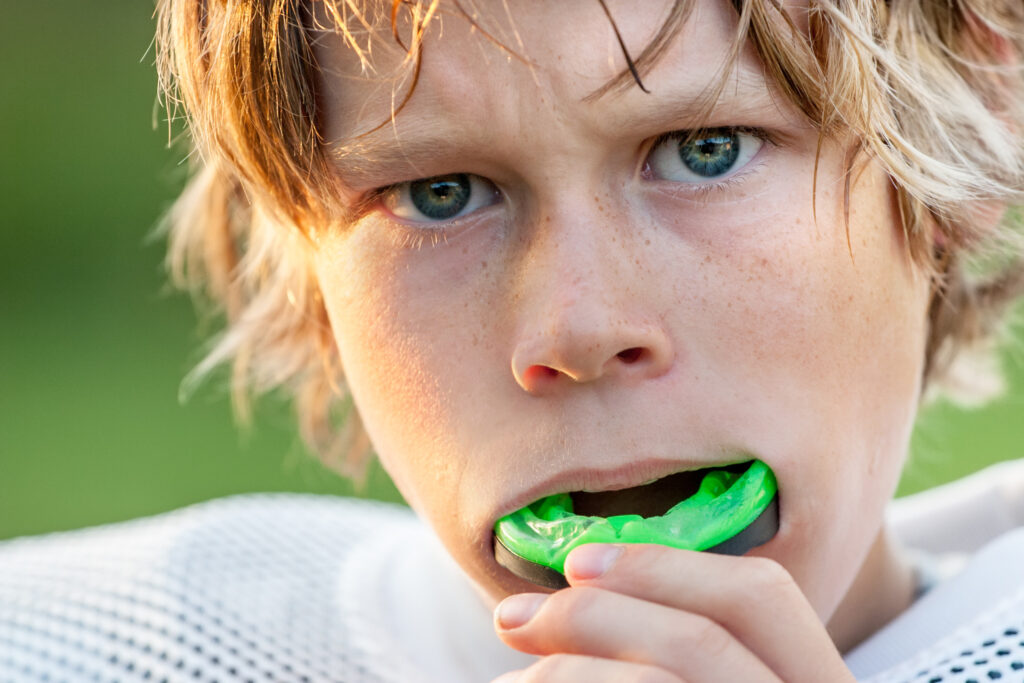
Sports-related orofacial trauma accounts for approximately 30% of all dental emergencies presenting to clinical practice. The maxillary central incisors remain most vulnerable to impact forces during athletic activities. Modern sports guards employ thermoplastic polymers with specific viscoelastic properties to redistribute traumatic forces across dental arches. Their protective mechanisms involve complex biomechanical interactions between material thickness, occlusal relationships, and force vector modification. Yet ideal protection depends on factors beyond simple material selection.
The Science Behind Impact Absorption in Sports Guards
The biomechanical properties of sports guards enable them to dissipate and redistribute impact forces that would otherwise transmit directly to the dentition, periodontal ligament, and alveolar bone. Impact mitigation mechanisms involve elastic deformation of the thermoplastic material, which absorbs kinetic energy through molecular chain stretching and compression. The guard’s thickness, typically 3-4 millimeters occlusally, creates a cushioning zone that increases the time interval of force application, thereby reducing peak impact magnitude.
Energy dissipation strategies include viscoelastic dampening within the polymer matrix and controlled deformation patterns that channel forces away from vulnerable anatomical structures. The material’s Shore hardness rating, ranging from 75-85 durometer, provides ideal balance between rigidity for tooth stabilization and flexibility for shock absorption, preventing stress concentration at the tooth-bone interface.
Types of Sports Guards and Their Protection Levels
When selecting appropriate oral protection for athletic activities, practitioners must evaluate three primary categories of sports guards that offer varying degrees of maxillofacial protection. Stock mouthguards provide minimal coverage through prefabricated thermoplastic polymers, offering basic shock absorption but limited occlusal adaptation. Boil-and-bite guards utilize thermoplastic material composition that softens at 60-80°C, enabling moderate customization to dental anatomy while maintaining 4mm thickness across incisal edges. Custom-fabricated guards, constructed from ethylene vinyl acetate copolymer sheets via vacuum-forming over stone models, deliver ideal protection through precise anatomical contouring and multilayered shock absorption zones. Research demonstrates custom guards reduce dental trauma incidence by 82% compared to stock variants, with superior force distribution across the dentoalveolar complex. Material composition directly correlates with energy dissipation capacity, determining protection effectiveness against orofacial injuries.
Common Dental Injuries Prevented by Mouthguards
Mouthguards substantially reduce the incidence of dentoalveolar trauma by absorbing and redistributing impact forces that would otherwise concentrate on individual teeth and supporting structures. The protective barrier prevents crown and root fractures, complete tooth avulsion with disruption of the periodontal ligament, and traumatic subluxation or intrusion of teeth into alveolar bone. Additionally, the appliance shields oral mucosa, labial frenulum, and tongue tissues from laceration against sharp incisal edges during high-velocity impacts.
Tooth Fractures and Chips
Although dental enamel ranks as the hardest substance in the human body, direct trauma from sports-related impacts frequently generates sufficient force to cause structural failure of the tooth crown. Impact forces exceeding 500 Newtons typically induce tooth enamel cracking patterns that propagate through the dentin layer. Horizontal impacts create oblique fractures affecting the incisal edges, while vertical forces produce longitudinal cracks extending toward the cementoenamel junction.
Root fracture risks increase considerably when traumatic forces transmit through an unprotected dental arch. Cervical third fractures occur most frequently, comprising 43% of all radicular injuries. Middle and apical third fractures demonstrate poorer prognoses due to compromised vascular supply. Properly fitted mouthguards dissipate impact energy across the entire dentition, reducing localized stress concentrations by 80-90% and preventing catastrophic structural failure.
Knocked Out Teeth
Complete tooth avulsion represents the most severe form of dentoalveolar trauma, occurring in 0.5-3% of all dental injuries and accounting for up to 16% of traumatic dental emergencies in contact sports. The forceful displacement severs the periodontal ligament fibers and neurovascular bundle, resulting in complete exarticulation from the alveolar socket. Immediate tooth recovery and replantation within 30 minutes greatly improves prognosis, with success rates declining precipitously after one hour due to periodontal ligament cell necrosis.
Properly fitted mouthguards distribute impact forces across multiple teeth and supporting structures, reducing concentrated loading that causes avulsion. The thermoplastic material absorbs kinetic energy while maintaining tooth position within the alveolus. Studies demonstrate 82% reduction in avulsion incidents among athletes wearing custom-fabricated guards. Successful dental restoration depends on rapid intervention, proper storage medium, and endodontic treatment timing.
Soft Tissue Lacerations
Sharp dental edges and fractured tooth fragments frequently cause intraoral soft tissue lacerations during traumatic impacts, affecting the lips, tongue, buccal mucosa, and gingival tissues in approximately 75% of orofacial sports injuries. These wounds result from direct trauma or secondary contact with dentition during mandibular displacement. Soft tissue damage severity ranges from superficial abrasions to deep penetrating wounds requiring surgical intervention.
Properly fitted mouthguards provide critical laceration prevention through multiple mechanisms. The thermoplastic barrier separates soft tissues from occlusal surfaces, preventing tooth-to-tissue contact during impact. The device’s shock-absorbing properties reduce force transmission through dental structures, minimizing fracture-related sharp edges. Additionally, mouthguards maintain jaw positioning, preventing lateral mandibular excursions that drive teeth into adjacent soft tissues. Clinical studies demonstrate 60% reduction in lip lacerations and 45% decrease in tongue injuries among athletes utilizing custom-fitted guards.
High-Risk Sports and Activities Requiring Dental Protection
Athletic activities demonstrate varying degrees of orofacial trauma risk based on the frequency and intensity of physical contact, projectile exposure, and fall potential. Contact sports including boxing, ice hockey, and rugby present the highest incidence of dental trauma, with studies documenting injury rates exceeding 50% among unprotected participants over a competitive season. Individual sports such as skateboarding and mountain biking, along with recreational activities including basketball and martial arts training, exhibit substantial dentoalveolar injury patterns despite their classification as limited-contact or non-contact disciplines.
Contact Sports Categories
Collision and combat sports demonstrate the highest incidence of orofacial trauma, with documented injury rates ranging from 13-39% among unprotected participants. Boxing, mixed martial arts, and full-contact karate generate direct maxillofacial impacts exceeding 500 pounds per square inch. Rugby and American football produce multidirectional collision forces through player-to-player contact, resulting in complex energy transfer mechanisms that propagate through mandibular and maxillary structures.
Ice hockey presents unique risks through high-velocity puck strikes (90-100 mph) and stick-related impacts targeting the dentoalveolar complex. Basketball and soccer, traditionally classified as limited-contact sports, account for 10-15% of dental emergencies due to elbow strikes and head collisions. Wrestling generates lateral shearing forces affecting temporomandibular joint stability. Sport-specific biomechanical analysis reveals distinct injury patterns correlating with contact intensity and force vectors.
Individual Sport Risks
Several individual sports generate biomechanical forces comparable to team-based contact activities, necessitating thorough dental protection protocols. Mountain biking presents maxillofacial trauma risks through high-velocity impacts with terrain or equipment, while skateboarding involves repetitive falls affecting the temporomandibular joint and anterior dentition. Combat sports including boxing and mixed martial arts create direct orofacial strikes, potentially fracturing enamel and damaging periodontal ligaments.
Gymnastics and equestrian activities demonstrate elevated dental injury rates despite non-contact classifications. The rotational forces in these sports compromise mandibular stability, affecting concussion prevention mechanisms. Properly fitted mouthguards redistribute impact forces across the dental arch, providing oral health benefits beyond immediate trauma prevention. These protective devices maintain occlusal relationships during sudden deceleration events, reducing crown fractures and root avulsions while stabilizing the condylar position within the glenoid fossa.
Recreational Activity Dangers
While traditional competitive sports receive primary attention in dental protection literature, recreational activities present equally significant orofacial injury mechanisms requiring prophylactic intervention. Skateboarding, mountain biking, and playground equipment usage demonstrate substantial recreational activity risks, with documented maxillofacial trauma rates approaching those of contact sports. Studies indicate 39% of dental emergencies originate from non-organized recreational pursuits.
Physical impact hazards manifest through multiple vectors: direct facial strikes against stationary objects, high-velocity ground contact following loss of balance, and equipment-related collisions. Skateboarders experience largely anterior dental trauma, with central incisors sustaining 67% of documented injuries. Mountain bikers encounter combined dentoalveolar and soft tissue damage from handlebar impacts. Trampoline activities generate unique vertical compression forces affecting temporomandibular structures. These recreational environments lack mandatory protective equipment protocols, increasing vulnerability to preventable orofacial trauma requiring detailed guard utilization.
Custom-Fitted vs. Over-the-Counter Guards: Protection Differences
Although both custom-fitted and over-the-counter mouthguards aim to reduce orofacial trauma during athletic activities, significant disparities exist in their protective capabilities and biomechanical properties. Custom-fitted guards, fabricated from dental impressions, demonstrate superior shock absorption through sufficient occlusal distribution and 3-5mm thickness across vulnerable anterior dentition. Their ethylene vinyl acetate construction guarantees material durability exceeding 24 months under regular use.
Over-the-counter variants exhibit inadequate palatal coverage and inconsistent thickness (1-2mm), compromising impact dissipation. Thermoplastic boil-and-bite models deform readily, reducing protection by 40% within three months. Custom guards provide enhanced comfort and customization through precise adaptation to individual dental anatomy, minimizing gag reflex and respiratory interference. Studies indicate custom-fitted appliances reduce dental injury risk by 82%, compared to 60% for stock guards.
Proper Fit and Positioning for Maximum Safety
Ideal protective efficacy requires precise mouthguard positioning encompassing complete maxillary arch coverage from first molar to contralateral first molar, with 2mm extension beyond gingival margins. The appliance must maintain 3-4mm occlusal thickness throughout posterior segments while tapering to 2mm anteriorly, ensuring proper mouth positioning without mandibular displacement.
Ideal guard placement necessitates uniform adaptation to palatal contours, eliminating air gaps that compromise force distribution. The labial flange should extend to mucobuccal fold depth, creating peripheral seal integrity. Posterior borders must terminate anterior to soft palate junction, preventing gag reflex activation while maintaining retention.
Verification protocols include bilateral occlusal contact assessment, lateral excursion testing, and phonetic evaluation. Inadequate retention, tissue blanching, or temporomandibular joint deviation indicates improper fit requiring immediate adjustment to prevent traumatic sequelae during athletic participation.
Care and Replacement Guidelines for Optimal Protection
Three critical maintenance protocols certify sustained mouthguard structural integrity: daily antimicrobial cleansing with 0.12% chlorhexidine gluconate solution, thorough air-drying at ambient temperature to prevent thermoplastic deformation, and storage in rigid ventilated containers preventing compression-induced distortion. These cleaning guidelines eliminate pathogenic biofilm accumulation while preserving elastomeric properties essential for impact attenuation.
Replacement indicators include visible perforations exceeding 2mm diameter, permanent indentation marks compromising occlusal surface thickness below 3mm, and deterioration of retention characteristics evidenced by spontaneous dislodgement during mandibular movement. Research demonstrates 40% reduction in protective efficacy after twelve months of regular use. Proper storage temperature parameters range between 15-25°C, avoiding direct ultraviolet exposure which accelerates polymer chain degradation. Professional assessment every six months verifies continued biomechanical performance standards meet ANSI/ADA Specification No. 99 requirements for intraoral protective devices.
Additional Benefits Beyond Tooth Protection
While dental protection remains the primary indication for athletic mouthguard utilization, contemporary biomechanical research demonstrates significant secondary prophylactic benefits affecting craniofacial structures and neurological function. Properly fitted guards stabilize temporomandibular joint positioning, reducing articular disc displacement and associated myofascial strain during high-impact activities.
Modern designs incorporating mandibular advancement features facilitate improved breathing through pharyngeal airway expansion, optimizing oxygen saturation during exertion. Custom-fabricated appliances maintain adequate interocclusal space while permitting enhanced speech clarity through strategic palatal contouring and anterior thickness modifications. Evidence indicates mouthguard usage correlates with decreased concussion severity by dissipating impact forces transmitted through the mandible to the skull base. Additionally, cervical spine stabilization occurs through enhanced jaw positioning, reducing whiplash-associated disorders. These multifactorial protective mechanisms extend therapeutic applications beyond traditional dental trauma prevention.
Frequently Asked Questions
Can I Wear a Sports Guard With Braces or Other Orthodontic Appliances?
Patients with orthodontic appliances require specialized mouthguards with proper fit considerations to accommodate brackets and wires. Custom-fabricated guards demonstrate superior compatibility with orthodontics, providing adequate thickness over occlusal surfaces while preventing soft tissue laceration and appliance damage.
How Much Does a Custom Sports Guard Typically Cost?
Custom sports guard pricing typically ranges from $200-$500 when fabricated through dental professionals using thermoplastic materials and precise maxillary/mandibular impressions. Affordable sports guard options include semi-custom boil-and-bite variants ($15-$30) offering adequate occlusal protection with compromised retention.
Will Wearing a Mouthguard Affect My Breathing During Intense Physical Activity?
Properly fitted mouthguards minimally impact respiratory function during exertion. Athletes report initial adaptation periods affecting comfort level, though mandibular positioning and ease of movement normalize within 7-14 days. Maxillary designs preserve excellent airway patency during peak ventilation demands.
Can Children Use Adult-Sized Sports Guards Safely?
Children should not use adult-sized sports guards due to improper fit considerations affecting maxillary and mandibular arch dimensions. Custom size recommendations based on pediatric dental anatomy guarantee ideal protection, preventing soft tissue trauma and maintaining proper occlusal relationships.
Are Sports Guards Covered by Dental Insurance Plans?
Insurance coverage for sports guards varies considerably among dental plan benefits. Most policies classify protective mouthguards as preventive appliances, though reimbursement percentages differ. Patients should verify specific coverage parameters with their insurance carriers before purchasing custom-fabricated guards.