
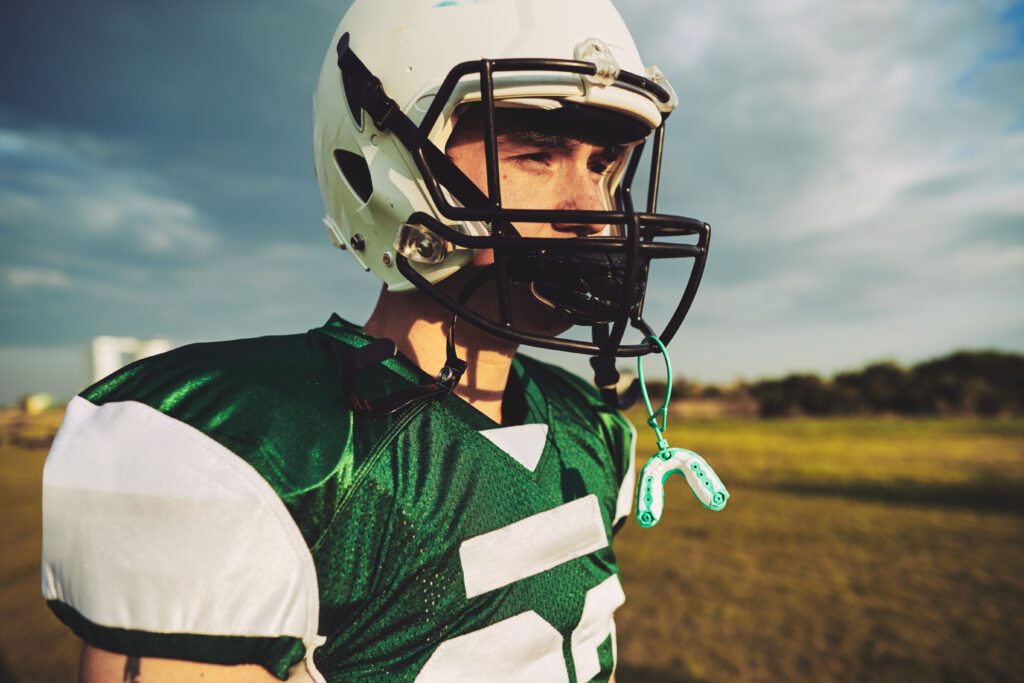
Night guards and sports guards are both dental appliances, but their intended functions and structural characteristics differ considerably. Night guards primarily address issues such as bruxism and temporomandibular joint disorders, while sports guards are designed to reduce oral injuries during physical activities. Differences in material composition, thickness, and fit further distinguish these devices. Understanding their distinct roles is vital for best oral protection and patient outcomes—yet, many patients remain uncertain about which option best suits their needs.
Primary Purpose and Function of Each Guard Type
While both night guards and sports guards serve protective functions in oral health, their primary purposes differ markedly based on the specific dental threats they address. Night guards specifically target nocturnal bruxism and temporomandibular joint disorders, providing bite force protection against unconscious grinding and clenching that can generate forces exceeding 250 pounds per square inch. These appliances redistribute occlusal pressure, preventing enamel erosion and jaw muscle fatigue.
Sports guards, conversely, function as impact-absorbing barriers during athletic activities, protecting teeth, lips, and soft tissues from traumatic injury. The oral health implications extend beyond immediate trauma prevention—sports guards reduce concussion risk by cushioning jaw impacts that transmit force to the cranium. Each guard type employs distinct materials and thickness specifications optimized for their respective protective requirements.
Material Composition and Durability Differences
The distinct protective functions of night guards and sports guards necessitate fundamentally different material compositions and structural properties. Night guards typically utilize harder acrylic resins or dual-laminate constructions combining rigid exteriors with softer thermoplastic interiors, designed to withstand repetitive grinding forces over extended periods. These materials prioritize long-term durability considerations against continuous wear patterns.
Sports guards employ ethylene vinyl acetate (EVA) or polyvinyl chloride compounds, engineered for impact absorption and energy dissipation. Material variations include multi-layered configurations with shock-absorbing cores surrounded by resilient outer shells. While sports guards require thickness ranging from 3-4mm for ideal protection, night guards maintain 2-3mm profiles for patient comfort during sleep. Sports guards demonstrate shorter lifespans due to environmental exposure and deformation from repeated impacts, whereas night guards exhibit superior longevity under consistent nocturnal use.
Design Features and Thickness Variations
Night guards and sports guards exhibit distinct design specifications tailored to their protective functions. Material density differs noticeably between the two devices, with sports guards requiring higher impact-resistant density (3-4mm) compared to night guards’ moderate density (1-3mm) optimized for grinding force distribution. The bite surface patterns vary accordingly, as night guards feature smooth occlusal surfaces to facilitate lateral jaw movement, while sports guards incorporate textured surfaces and specialized thickness ranges of 2-5mm to absorb and dissipate external impact forces.
Material Density Differences
When comparing oral protective devices, material density represents a critical distinguishing factor between night guards and sports guards, directly influencing their protective capabilities and clinical applications. Night guards utilize lower-density materials, typically measuring 1.1-1.3 g/cm³, optimized for sustained nocturnal wear while minimizing jaw muscle fatigue. These devices prioritize patient comfort during extended use periods, employing materials that balance durability with flexibility.
Sports guards require higher material density specifications, ranging from 1.4-1.8 g/cm³, engineered to absorb and dissipate impact forces during athletic activities. This density comparison reveals fundamental design priorities: night guards emphasize prolonged wear tolerance and bruxism management, while sports guards maximize energy absorption capacity. The differential material density directly correlates with each device’s therapeutic efficacy and protective function within distinct clinical contexts.
Bite Surface Patterns
How do occlusal surface configurations differ between protective oral appliances designed for distinct therapeutic applications? Night guards feature flat occlusal surfaces that distribute bite pressure patterns evenly across posterior teeth, minimizing muscle hyperactivity during parafunctional movements. These appliances typically measure 2-3mm in thickness with smooth, polished surfaces that guide mandibular movement without creating interference points.
Sports guards present contrasting design characteristics with thicker occlusal surfaces (3-4mm) that accommodate sudden impact forces rather than repetitive grinding. Their textured bite surfaces provide enhanced retention during athletic activities, though bite force measurements indicate they restrict natural occlusion more considerably than night guards. The sports guard’s uniform thickness extends across all dental surfaces, creating a cushioning barrier that dissipates traumatic forces throughout the entire arch, unlike night guards’ selective coverage focused on occlusal contact zones.
Guard Thickness Ranges
Standard thickness parameters for protective oral appliances range from 1.5mm to 5mm, with specific measurements determined by clinical application and patient-specific biomechanical requirements. Night guards typically measure 1.5-3mm, providing adequate protection against bruxism while maintaining patient comfort during sleep. Sports guards require substantially greater thickness, ranging from 3-5mm, to absorb high-impact forces during athletic activities.
Guard thickness customization addresses individual anatomical variations and force distribution patterns. Posterior regions often require increased thickness due to elevated occlusal forces, while anterior segments may utilize reduced dimensions for enhanced comfort. Guard thickness personalization considers factors including parafunctional habits severity, athletic injury risk assessment, and mandibular positioning requirements. Clinicians evaluate patient-specific biomechanics to determine ideal thickness distribution, balancing protective efficacy with compliance rates and oral proprioception maintenance.
Coverage Areas and Fit Requirements
Both night guards and sports guards require precise adaptation to dental anatomy, though their coverage specifications differ markedly based on protective function. Night guards typically cover either the upper or lower dental arch, extending 2-3mm beyond the gingival margin while maintaining minimal palatal coverage to reduce gagging reflexes. Sports guards mandate extensive coverage of the upper arch, extending to the mucobuccal fold and including 10-15mm of palatal coverage for ideal impact distribution.
Custom sizing options vary considerably between applications. Night guards prioritize occlusal precision through laboratory-fabricated models, while sports guards emphasize moldability considerations for immediate chairside adaptation. Retention requirements differ substantially: night guards rely on passive retention through intimate tooth contact, whereas sports guards require enhanced undercut engagement to resist displacement during athletic activity.
When to Wear Each Type of Guard
The timing of mouthguard usage differs fundamentally between night guards and sports guards based on their distinct protective functions. Night guards should be worn throughout sleep periods to prevent nocturnal bruxism-related dental damage, while sports guards require consistent use during all athletic practices, competitions, and training sessions where orofacial trauma risk exists. Proper adherence to these wear schedules guarantees effective protection against the specific dental hazards each guard type addresses.
During Sleep Hours
While night guards are specifically designed for continuous wear throughout sleep periods of 6-8 hours, sports guards serve no therapeutic purpose during sleep and may pose safety risks if worn overnight. Night guards address nocturnal bruxism episodes by creating a protective barrier between upper and lower teeth, preventing enamel erosion and temporomandibular joint strain. Their slim profile and precise occlusal fit accommodate natural jaw clenching patterns without compromising airway patency.
Sports guards, conversely, feature bulkier construction that can obstruct breathing during sleep and potentially dislodge, creating aspiration hazards. Their moisture-retention properties promote bacterial proliferation when worn for extended periods. Dental professionals emphasize proper guard selection based on intended use, as wearing inappropriate appliances during sleep hours compromises both therapeutic efficacy and patient safety.
Athletic Activity Times
Sports guards require immediate insertion before any athletic activity involving potential facial impact, including contact sports, martial arts, and high-velocity recreational activities. Athletes should position these protective devices prior to warm-ups, maintaining placement throughout practice sessions and competitive events. During peak season training, when injury risk escalates due to intensive conditioning and frequent competitions, consistent sports guard utilization becomes critical for dental preservation.
Professional guidelines recommend continuous wear during all contact-based athletic participation, regardless of skill level or perceived risk. Off season recovery periods present opportunities for guard inspection, replacement, and professional refitting to guarantee maximal protection efficacy. Unlike night guards designated for nocturnal use, sports guards serve exclusively during athletic engagement, requiring removal immediately post-activity to prevent bacterial accumulation and maintain oral hygiene standards.
Cost Comparison and Insurance Coverage
When patients consider oral protective devices, financial factors considerably influence their treatment decisions, with night guards typically ranging from $300 to $800 for custom-fabricated appliances versus sports guards costing between $15 and $500 depending on customization level. Dental insurance coverage varies markedly between these devices. Medical insurance frequently covers night guards when prescribed for diagnosed bruxism or temporomandibular disorders, requiring documentation of clinical necessity. Sports guards rarely receive insurance reimbursement, placing the expense entirely on patients.
Personal budget considerations determine device selection quality. Over-the-counter night guards cost $20-$50 but provide limited durability and effectiveness. Professional laboratory-fabricated guards justify higher costs through superior materials, precise occlusal adjustment, and extended lifespan averaging three to five years. Athletes requiring multiple sports guards annually may find cumulative expenses exceeding single night guard investments.
Maintenance and Replacement Guidelines
Beyond initial investment considerations, proper care protocols substantially impact the functional longevity and cost-effectiveness of both night guards and sports guards. Night guards require daily cleaning with non-abrasive toothpaste and cold water, followed by air-drying in ventilated cases. Weekly deep cleaning and disinfection procedures using denture cleaners eliminate bacterial accumulation. Replacement typically occurs every 12-24 months, depending on bruxism severity and material degradation.
Sports guards demand immediate post-use rinsing and antimicrobial solution soaking to prevent pathogenic colonization. Proper storage methods include rigid, perforated containers maintaining shape integrity between uses. Athletes should replace guards seasonally or following significant impact events compromising structural integrity. Both appliances require professional inspection during routine dental examinations to assess wear patterns, material fatigue, and occlusal changes necessitating replacement.
Can You Use One Guard for Both Purposes?
Why might patients consider using a single oral appliance for both nocturnal bruxism management and athletic protection? Economic factors and convenience often motivate this inquiry. However, clinical evidence demonstrates that guard versatility remains limited due to fundamental design differences. Night guards utilize harder materials calibrated for sustained clenching forces, while sports guards employ shock-absorbing polymers designed for impact distribution.
Dual purpose usage compromises both protective functions. A night guard’s rigid construction provides inadequate cushioning against athletic trauma, potentially increasing dental injury risk. Conversely, a sports guard’s softer composition lacks durability against nightly grinding forces, resulting in rapid degradation and reduced therapeutic efficacy. Dental professionals consistently recommend separate appliances to guarantee ideal protection. Each guard’s specialized design addresses distinct biomechanical challenges that cannot be adequately managed through a single device.
Frequently Asked Questions
Are Night Guards and Sports Guards Safe for Children to Use?
Both night guards and sports guards, when professionally fitted, demonstrate high night guards safety and sports guards effectiveness for pediatric populations. Clinical evidence supports their use in preventing dental trauma and managing bruxism, provided regular evaluation by dental professionals occurs.
Can Wearing These Guards Affect Speech or Breathing?
Wearing oral guards may temporarily impact speech clarity and breathing comfort, especially if the device is bulky or ill-fitting. Properly fabricated and adjusted guards minimize these effects, supporting ideal patient adaptation and overall oral health functionality.
Do These Guards Cause Allergic Reactions or Sensitivities?
Both night guards and sports guards can potentially cause allergic reactions or sensitivity issues in some patients, particularly if made from materials such as latex or specific plastics. Clinical assessment of patient history helps minimize adverse events and optimize outcomes.
How Should I Store My Guard When Not in Use?
The individual should store their guard in a ventilated case to guarantee proper storage and reduce microbial growth. Evidence-based cleaning methods include rinsing with cool water and using non-abrasive cleaners before drying thoroughly, maintaining ideal hygiene and device longevity.
Can Guards Be Customized With Colors or Logos?
Guards can be customized with colors or logos, offering various customization options to accommodate individual design preferences. Clinical evidence suggests that patient engagement and compliance may increase when protective oral appliances reflect personal aesthetic choices, supporting positive patient outcomes.