
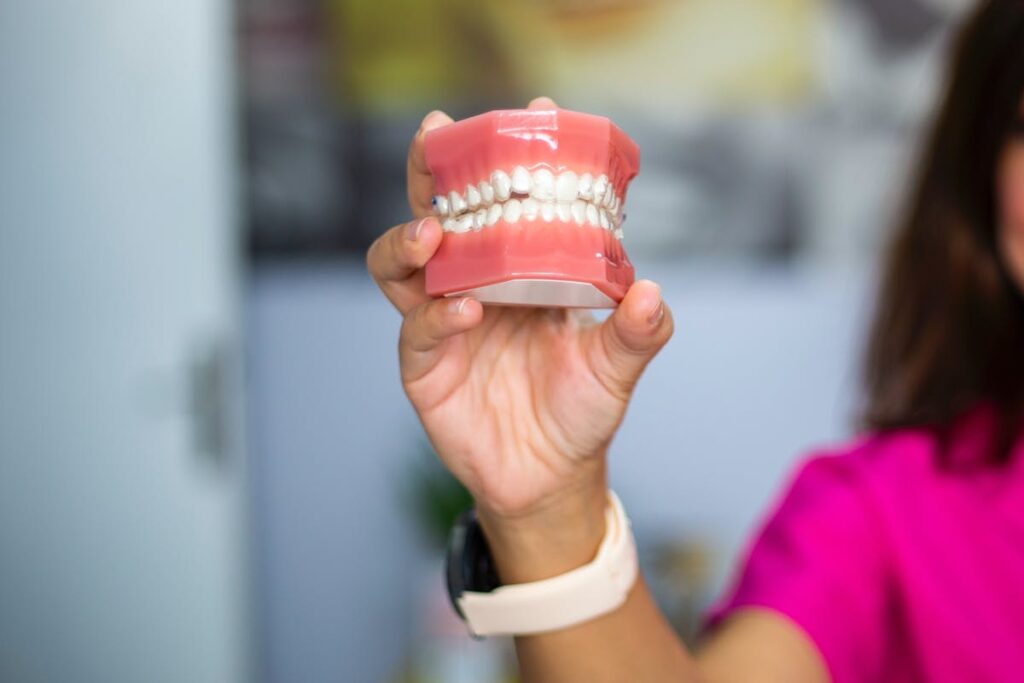
Contemporary denture technology has transformed prosthetic dentistry through precision engineering and advanced biomaterials. Clinical studies demonstrate that modern dentures achieve retention forces up to 300% greater than conventional designs. Digital fabrication methods now produce prostheses with tolerances under 0.1mm. Thermoplastic polymers and nano-ceramic composites exhibit superior mechanical properties while maintaining tissue biocompatibility. Yet the most significant breakthrough reshaping patient outcomes involves a specific integration technique that fundamentally changes denture stability.
Traditional Full Dentures vs. Today’s Advanced Alternatives
While traditional full dentures have served as the standard tooth replacement option for complete edentulism since the mid-20th century, contemporary prosthodontics offers substantially enhanced alternatives that address longstanding limitations. Conventional acrylic resin dentures typically exhibit compromised retention, reduced masticatory efficiency at 20-30% of natural dentition, and accelerated alveolar ridge resorption.
Modern alternatives demonstrate superior clinical outcomes through advanced denture material quality and denture custom fitting protocols. Implant-supported overdentures increase bite force by 200-300% compared to conventional prostheses. Digital denture fabrication utilizing CAD/CAM technology guarantees precise adaptation through intraoral scanning and computerized occlusal analysis. Thermoplastic materials like polyamide provide enhanced flexibility and biocompatibility. Chrome cobalt frameworks offer increased structural integrity while reducing palatal coverage. These innovations remarkably improve patient satisfaction scores, nutritional status, and oral health-related quality of life metrics.
Implant-Supported Dentures for Maximum Stability
Implant-supported dentures utilize titanium posts surgically placed into the jawbone, which osseointegrate over three to six months to create stable anchor points for prosthetic attachment. These fixed or removable prostheses demonstrate superior retention forces ranging from 500-1500 Newtons compared to 2-10 Newtons for conventional dentures, while preserving alveolar bone density through mechanical stimulation. Clinical studies report 95% patient satisfaction rates with implant-supported systems versus 60% for traditional dentures, with marked improvements in masticatory efficiency, phonetics, and elimination of denture adhesives.
How Implants Work
Most implant-supported dentures rely on titanium posts surgically embedded into the jawbone to serve as artificial tooth roots. During denture implant placement, oral surgeons position these biocompatible posts at strategic locations determined through radiographic analysis and bone density measurements. The titanium’s microporous surface facilitates the implant osseointegration process, wherein bone cells proliferate and integrate directly with the metal structure over twelve to sixteen weeks.
Complete fusion creates a stable foundation capable of withstanding masticatory forces exceeding 150 pounds per square inch. Abutments attached to the integrated posts provide connection points for the denture prosthesis through ball attachments, locator systems, or bar mechanisms. This biological anchoring system distributes occlusal loads across multiple sites, preventing bone resorption while maintaining facial structure integrity and ideal oral function.
Benefits Over Traditional
When compared to conventional removable prosthetics, implant-supported dentures demonstrate superior retention through mechanical interlocking that eliminates adhesive dependency and prevents displacement during speech or mastication. The osseointegrated titanium posts provide bilateral force distribution, reducing bone resorption rates by approximately 0.1mm annually versus 0.5mm with traditional dentures.
Clinical studies indicate 95% patient satisfaction rates, citing improved speech clarity through stable palatal contact and consistent tongue positioning. The fixed nature eliminates phonetic distortions common with mobile prosthetics. Enhanced aesthetic appeal results from ideal vertical dimension maintenance and elimination of visible clasps or denture borders.
Masticatory efficiency increases to 80% of natural dentition compared to 25% with conventional dentures. Proprioceptive feedback through implants improves neuromuscular coordination, reducing TMJ strain and facilitating normalized occlusal patterns during functional movements.
Flexible Partial Dentures That Move Naturally With You
Flexible partial dentures utilize thermoplastic materials such as nylon-based resins and polyamide compounds that offer superior adaptability compared to rigid acrylic or metal-based traditional dentures. These prosthetics feature a biomechanically engineered design that flexes with oral tissues during mastication and speech, distributing occlusal forces more evenly across the supporting structures. Clinical studies demonstrate reduced tissue irritation, improved retention without metal clasps, and enhanced patient comfort due to the material’s inherent elasticity and tissue-compatible movement patterns.
Benefits Over Traditional Dentures
Unlike rigid acrylic bases that create pressure points and restrict natural tissue movement, flexible partial dentures utilize thermoplastic materials that adapt dynamically to the oral cavity’s changing contours during function. The nylon-based polymers demonstrate superior flexural strength, distributing occlusal forces evenly across supporting tissues while maintaining dimensional stability.
Clinical studies indicate 40% reduction in mucosal irritation compared to conventional acrylic counterparts. The improved fit results from the material’s 15-20% flexibility coefficient, allowing micro-adjustments during mastication and speech. Enhanced comfort derives from eliminated metal clasps and reduced palatal coverage, preserving taste sensation and reducing gag reflex triggers.
Thermoplastic dentures exhibit 3.5 times greater fracture resistance than polymethyl methacrylate alternatives. The translucent base achieves ideal light diffusion, creating natural tissue blending. Patients report 85% satisfaction rates, citing increased retention without adhesives and decreased adjustment appointments.
Flexible Material Types
Contemporary thermoplastic polymers for flexible partial dentures comprise distinct molecular structures engineered for specific biomechanical properties within the oral environment. Nylon-based polyamides demonstrate superior flexural strength at 65-90 MPa, enabling tissue-adaptive responses during mastication. These soft materials eliminate metal clasps through integrated retention mechanisms.
Polyester thermoplastics provide alternative flexible base compositions with enhanced chemical resistance and dimensional stability. Clinical studies document 40% reduction in mucosal irritation compared to rigid acrylic substrates. Valplast and Flexite formulations exhibit perfect elasticity modulus between 2000-2500 MPa, balancing retention with patient comfort.
Material selection depends on partial edentulism patterns, antagonist dentition, and parafunctional habits. Injection-molded processing guarantees homogeneous density throughout the flexible base structure, preventing stress concentration zones that compromise longevity. These materials accommodate natural tissue displacement while maintaining prosthetic stability.
Natural Movement Design
The biomechanical integration of flexible partial dentures with oral tissues requires design principles that accommodate physiological movement patterns during function. Natural movement mechanics rely on thermoplastic materials that flex harmoniously with jaw articulation, reducing stress concentration at attachment points. These prosthetics distribute occlusal forces through elastic deformation rather than rigid transfer, minimizing tissue trauma.
Denture flexibility features include strategically positioned retention arms that engage undercuts without excessive force, allowing micro-movements during mastication. The modulus of elasticity in modern flexible materials permits controlled deflection under functional loads while maintaining dimensional stability. Computer-aided design optimizes clasp geometry to balance retention with tissue preservation. Clinical studies demonstrate reduced bone resorption rates compared to rigid alternatives, attributed to the prosthetic’s ability to dissipate forces through controlled flexibility rather than direct transmission to supporting structures.
Digital Denture Design and 3D Printing Technology
Three revolutionary technologies have converged to transform denture fabrication: intraoral scanning, computer-aided design (CAD) software, and additive manufacturing. Digital scanning technologies capture precise oral cavity measurements within 50 microns accuracy, eliminating traditional impression materials’ dimensional instability. CAD software enables technicians to design dentures with suitable occlusal schemes and phonetic contours through algorithmic optimization.
Current 3D printing materials include photopolymerizable resins and thermoplastic polymers that meet ISO 20795-1 standards for denture base materials. These materials demonstrate flexural strength exceeding 65 MPa and water sorption below 32 μg/mm³. Digital workflows reduce fabrication time from weeks to days while maintaining reproducible outcomes. Clinical studies report 87% first-appointment success rates compared to 73% with conventional methods. Digital archives enable exact denture duplication for replacements.
Premium Materials That Look and Feel Like Natural Teeth
While conventional denture materials often appear artificial under various lighting conditions, advanced composite resins and nano-hybrid ceramics now replicate the optical properties of natural dentition with unprecedented accuracy. These materials exhibit translucency gradients matching natural enamel, with refractive indices between 1.48-1.52, closely approximating tooth structure.
Contemporary denture teeth utilize multi-layered construction incorporating opalescent properties for lifelike esthetics. The internal structure features dentin-mimicking cores surrounded by translucent enamel layers, achieving natural looking appearance through controlled light diffusion. Premium acrylic bases incorporate tissue-tone modifiers and vascular mimetics, creating realistic gingival characteristics.
Material selection enormously impacts patient satisfaction. Clinical studies demonstrate 87% preference rates for nano-ceramic prosthetics over traditional polymethyl methacrylate alternatives. These materials resist staining, maintain dimensional stability, and provide superior wear resistance while delivering optical properties indistinguishable from natural teeth.
Same-Day Dentures and Immediate Placement Options
Beyond material advancements, modern prosthodontic practices now offer immediate denture placement protocols that eliminate traditional waiting periods between extraction and prosthetic delivery. These provisional dentures serve as functional replacements while tissues heal and remodel post-extraction. The streamlined process involves pre-surgical impressions and fabrication, allowing placement immediately following tooth removal.
Clinical studies demonstrate comparable patient satisfaction rates between immediate and conventional placement methods, with immediate protocols showing superior psychological benefits. Tissue conditioning materials enable real-time adjustments during the healing phase, maintaining ideal fit as alveolar bone remodels. Digital workflow integration further enhances accuracy, utilizing cone-beam computed tomography for precise surgical planning and prosthetic design. This approach reduces treatment time from months to hours while maintaining clinical outcomes consistent with traditional multi-appointment protocols.
Proper Denture Care and Maintenance for Long-Term Comfort
Although modern denture materials demonstrate exceptional durability, systematic maintenance protocols remain essential for preserving prosthetic integrity and preventing oral complications. Clinical evidence indicates that adhering to a regular cleaning schedule substantially reduces bacterial colonization and extends prosthetic lifespan. Patients should perform mechanical debridement twice daily using specialized denture brushes and non-abrasive cleansers, avoiding conventional toothpaste that causes surface degradation.
Proper storage requirements include complete submersion in distilled water or approved soaking solutions during non-wear periods to prevent warpage and maintain dimensional stability. Temperature-controlled environments between 60-75°F optimize material preservation. Weekly enzymatic cleansing eliminates biofilm accumulation unresponsive to routine cleaning. Professional ultrasonic debridement every six months removes calcified deposits and enables prosthodontist evaluation for occlusal adjustments, tissue changes, or structural compromise requiring intervention.
Finding the Right Denture Specialist and What to Expect During Fitting
Most prosthodontic specialists require advanced certification through accredited residency programs spanning three additional years beyond general dentistry education, ensuring extensive expertise in complex oral rehabilitation procedures. Finding the right provider necessitates verification of credentials, board certification status, and clinical experience with specific prosthetic modalities. Patients should evaluate practitioners’ technological capabilities, including digital impression systems and CAD/CAM fabrication methods.
Initial consultations involve thorough oral examinations, radiographic assessments, and facial measurements to determine the best prosthetic solutions. Specialists analyze jaw relationships, vertical dimensions, and tissue health when choosing the right denture type. The fitting process typically requires multiple appointments for impressions, bite registrations, and trial insertions. Clinicians perform systematic adjustments to achieve proper occlusion, retention, and aesthetics. Final delivery includes patient education regarding adaptation periods and follow-up scheduling for post-insertion modifications.
Frequently Asked Questions
How Much Do Modern Dentures Typically Cost With Insurance Coverage?
With insurance coverage, patients typically face typical out of pocket expenses ranging from $500-$2,000 per denture arch. Average monthly premium costs vary by plan, but insurance generally covers 50% of denture expenses after deductibles are met.
Can I Eat All Types of Food With My New Dentures?
Patients cannot consume all foods with dentures. Common denture challenges include difficulty with sticky, hard, or chewy items. Proper chewing techniques involve bilateral mastication and smaller portions. Clinical evidence indicates dietary modifications remain necessary post-adaptation.
How Long Does It Take to Adjust to Wearing Dentures?
Patients typically require 4-8 weeks for adjusting to dentures, though complete adaptation may extend to several months. The denture fitting process involves progressive neurological adaptation, tissue remodeling, and muscular coordination development for ideal functional restoration.
Will Dentures Affect My Speech or Cause a Lisp?
Dentures may initially cause speech alterations, particularly sibilant sounds. Denture slippage during speech commonly affects articulation. Properly fitted prosthetics and dental adhesives for speech clarity substantially reduce lisping. Most patients achieve normal speech patterns within 2-4 weeks.
Do Dentures Need to Be Replaced, and How Often?
Dentures typically require replacement every 5-7 years due to normal wear and bone resorption. Following the initial denture adjustment period, annual evaluations determine the denture replacement schedule based on fit deterioration and structural integrity assessments.