
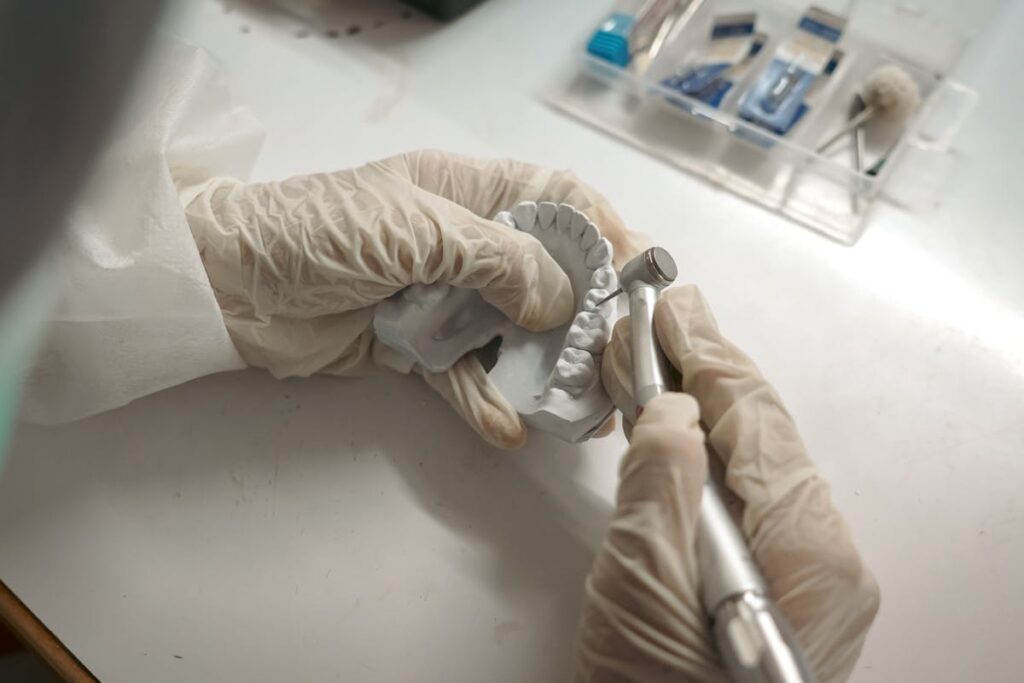
When facing tooth loss, patients encounter a critical decision between full and partial denture solutions. Each option presents distinct clinical advantages based on remaining dentition, bone density, and oral health status. The selection process requires careful evaluation of anatomical factors, functional requirements, and financial considerations. Understanding these prosthetic differences enables informed treatment planning. The path to ideal tooth replacement begins with thorough assessment of individual circumstances and long-term oral health goals.
Understanding Full Dentures and How They Work
Full dentures, also known as complete dentures, replace all natural teeth in either the upper or lower jaw when patients experience total tooth loss due to periodontal disease, severe decay, or trauma. These removable prosthetic devices restore oral function and facial aesthetics through precise fabrication techniques.
Modern denture construction materials include acrylic resin for the base and porcelain or composite resin for artificial teeth. These materials provide durability, natural appearance, and biocompatibility. The denture fitting process involves multiple appointments: initial impressions, jaw measurements, bite registration, and trial fittings before final placement. Dentists guarantee proper suction and stability through accurate tissue adaptation.
Full dentures rely on adhesion to gum tissues and underlying bone structure. Regular adjustments accommodate tissue changes, maintaining optimum fit and preventing complications such as sore spots or bone resorption.
Breaking Down Partial Dentures and Their Benefits
Partial dentures offer a targeted solution for patients who retain some healthy natural teeth while requiring replacement of missing teeth. These prosthetic devices come in several configurations, including cast metal frameworks with acrylic bases, flexible thermoplastic designs, and implant-supported options, each engineered to integrate with existing dentition. Clinical evidence demonstrates that partial dentures provide significant functional benefits, including restoration of masticatory efficiency, prevention of remaining teeth migration, and preservation of facial support structures while maintaining a more conservative approach than full-mouth rehabilitation.
Partial Denture Types
When tooth loss affects only certain areas of the mouth rather than the entire dental arch, partial dentures offer a targeted prosthetic solution that preserves remaining natural teeth while restoring function and aesthetics. Partial denture styles vary based on material composition and retention mechanisms. Removable partial dentures represent the most common category, featuring either acrylic resin bases or cast metal frameworks. Cast metal partials provide superior strength and minimal palatal coverage, while acrylic versions offer cost-effectiveness for temporary applications. Flexible thermoplastic partials eliminate metal clasps, enhancing comfort and appearance. Precision attachment partials utilize interlocking components between crowns and denture bases for improved stability. Each type addresses specific clinical requirements, with selection determined by factors including remaining tooth distribution, patient preferences, and long-term prognosis.
Key Advantages Explained
Beyond material considerations and design variations, partial dentures deliver multiple clinical benefits that make them a preferred treatment option for patients with selective tooth loss. These prosthetic devices restore dental aesthetics by filling visible gaps, recreating natural tooth contours, and supporting facial musculature to prevent premature aging. Functionally, partial dentures substantially improve chewing efficiency, enabling patients to consume a wider variety of foods and maintain proper nutrition. The appliances distribute occlusal forces evenly across remaining teeth, reducing excessive wear and preventing tooth migration. Additionally, partial dentures preserve alveolar bone structure by stimulating the underlying tissue during mastication. They maintain proper spacing between existing teeth, preventing orthodontic complications. Cost-effectiveness compared to implant-supported restorations makes partial dentures accessible for diverse patient populations requiring tooth replacement solutions.
Key Differences Between Full and Partial Dentures
How do full and partial dentures differ in their fundamental design and application? Full dentures replace an entire arch of missing teeth and rest directly on the gum tissue, requiring complete tooth extraction before placement. These prosthetics utilize suction and denture adhesives for retention. Conversely, partial dentures fill gaps between existing natural teeth, anchoring to remaining dentition through metal clasps or precision attachments.
Among tooth replacement options, partial dentures preserve healthy teeth while addressing specific edentulous spaces. Full dentures necessitate thorough oral rehabilitation when no teeth remain. Denture customization varies substantially between types: partials require precise framework design to integrate with existing teeth, while full dentures focus on ideal tissue adaptation and facial support. Material selection, fabrication techniques, and adjustment protocols differ significantly, reflecting each prosthetic’s unique biomechanical requirements and patient-specific anatomical considerations.
Determining Your Candidacy for Each Type
Understanding these fundamental differences establishes the foundation for evaluating patient suitability for each prosthetic option. Evaluating oral health factors begins with examining remaining dentition quality, periodontal status, and root stability. Dentists assess whether salvageable teeth can support partial denture frameworks or if extraction necessitates complete dentures.
Assessing jawbone structure proves critical for prosthetic success. Adequate alveolar ridge height and width guarantee proper denture retention and stability. Patients with significant bone resorption may require bone grafting before full denture placement. Partial denture candidates need sufficient bone density surrounding anchor teeth to withstand occlusal forces.
Additional determinants include oral hygiene compliance, manual dexterity for denture maintenance, and systemic health conditions affecting healing. Financial considerations and patient expectations also influence treatment selection between full and partial prosthetic rehabilitation.
Cost Comparison and Insurance Coverage Options
Financial considerations markedly influence a patient’s denture treatment decisions, with full dentures typically ranging from $600-$8,000 per arch while partial dentures cost between $300-$5,000 depending on materials and complexity. Most dental insurance plans provide coverage of 15-50% for denture procedures, though specific benefits vary based on policy limitations, deductibles, and whether the provider participates in the patient’s network. Many dental practices offer structured payment plans through third-party financing companies or in-house arrangements, enabling patients to distribute treatment costs over 6-24 months with varying interest rates.
Average Price Ranges
The cost differential between full and partial dentures reflects variations in materials, laboratory fabrication complexity, and clinical time requirements. Partial dentures typically range from $650 to $2,500 per arch, while full dentures cost between $1,300 and $3,000 per arch. Premium materials such as porcelain teeth or chrome-cobalt frameworks increase expenses considerably. Implant-supported dentures command substantially higher fees, ranging from $3,500 to $30,000 depending on the number of implants required.
Most dental practices offer financing options to accommodate diverse budgetary constraints. Payment flexibility through third-party medical credit companies enables patients to distribute costs over 6-60 months. Some providers structure in-house payment plans with minimal interest rates. Patients should request detailed treatment estimates including laboratory fees, adjustment appointments, and potential reline costs before committing to treatment.
Insurance Plan Benefits
While dental insurance coverage for dentures varies remarkably across providers and plan types, most traditional policies classify these prosthetic devices as major restorative procedures subject to 50% coinsurance after deductible satisfaction. Insurance plan limitations typically include annual maximum benefits ranging from $1,000-$2,500, potentially requiring patients to distribute treatment across multiple benefit periods. Waiting periods of 6-12 months commonly apply for new enrollees seeking denture coverage.
The insurance claim process necessitates pre-authorization documentation, including radiographs, periodontal charting, and clinical justification for tooth extraction and prosthetic replacement. Medicare Advantage plans may provide supplemental denture benefits absent from Original Medicare. Patients should verify frequency limitations, as most insurers restrict denture replacement to once every five years unless clinically warranted due to breakage or significant anatomical changes.
Payment Plan Options
Although dental practices increasingly recognize the financial burden of prosthetic rehabilitation, flexible payment arrangements have emerged as essential facilitators for patients requiring denture therapy. Contemporary practices offer customized payment plans that distribute treatment costs over extended periods, reducing immediate financial strain. These arrangements typically include interest-free periods ranging from six to twenty-four months, enabling patients to receive necessary prosthetic care without postponing treatment due to economic constraints.
Flexible financing options through third-party healthcare lenders provide additional alternatives, offering competitive interest rates and extended repayment terms. Many practices implement tiered payment structures correlating with treatment complexity, allowing partial denture patients to access lower monthly payments compared to full denture recipients. Pre-treatment cost estimates facilitate informed decision-making, while automatic payment processing guarantees consistent account management throughout the treatment continuum.
Daily Care and Maintenance Requirements
Both full and partial dentures require consistent daily maintenance to preserve their structural integrity, prevent oral infections, and extend their functional lifespan. Proper denture cleaning techniques include brushing with non-abrasive cleanser after meals, avoiding regular toothpaste which causes microscopic scratches harboring bacteria. Patients should rinse dentures thoroughly before reinsertion to remove chemical residues.
Overnight denture storage procedures involve submerging prosthetics in water or approved soaking solutions to prevent warping and material degradation. Partial dentures with metal clasps require additional attention to prevent plaque accumulation around attachment points. Full dentures necessitate palate cleaning and gum massage to stimulate circulation. Both types demand annual professional cleanings to remove calcified deposits and assess fit adjustments, ensuring ideal oral health outcomes and prosthetic longevity.
Expected Lifespan and Replacement Timelines
How long dentures remain functional depends on multiple factors including material composition, oral tissue changes, and maintenance adherence. Full dentures typically require replacement every 5-7 years, while partial dentures may last 10-15 years with proper care. Primary longevity factors include bone resorption rates, which accelerate following tooth extraction, causing dentures to lose retention progressively. Material degradation occurs through daily wear, affecting occlusal surfaces and prosthetic teeth stability.
Maintenance considerations directly impact replacement timelines. Patients who follow prescribed cleaning protocols and attend regular adjustments extend denture lifespan considerably. Relining procedures every 2-3 years compensate for tissue changes, postponing complete replacement. Clinical indicators necessitating replacement include persistent sore spots, compromised chewing efficiency, facial support loss, and visible wear patterns exceeding 2mm.
Making Your Final Decision With Your Dentist
Ultimately, the decision between full and partial dentures requires thorough evaluation of clinical findings, patient-specific factors, and treatment objectives during consultation appointments. Dentist patient collaboration involves comprehensive oral examination, radiographic assessment, and discussion of medical history to determine suitable prosthetic solutions. Practitioners evaluate remaining dentition stability, periodontal health, bone density, and occlusal relationships when recommending treatment modalities.
Informed decision making necessitates clear communication regarding procedural expectations, maintenance requirements, and financial considerations. Dentists present evidence-based options, explaining advantages and limitations of each prosthetic type relative to individual circumstances. Patients should disclose lifestyle preferences, aesthetic concerns, and functional priorities to guide treatment planning. Documentation of treatment consent, anticipated outcomes, and alternative therapies guarantees mutual understanding. Regular follow-up appointments allow modification of treatment plans based on evolving clinical conditions and patient satisfaction levels.
Frequently Asked Questions
Can I Eat Normally Immediately After Getting Dentures?
Patients cannot eat normally immediately after receiving dentures. Initial dietary restrictions include soft foods only, as chewing sensitivity and tissue adaptation require 2-4 weeks. Gradual food progression allows proper healing and denture adjustment for ideal function.
Will Dentures Affect My Speech or Pronunciation?
Patients typically experience temporary speech alterations with new dentures, particularly with “s” and “f” sounds. Speech training exercises accelerate adaptation within 2-4 weeks. Proper denture fit adjustments by dental professionals minimize pronunciation difficulties and restore normal articulation.
Can I Sleep While Wearing My Dentures?
Dental professionals recommend nighttime denture removal to allow oral tissues to rest and prevent fungal infections. Patients should establish a denture cleaning routine, soaking prosthetics overnight in approved solutions while sleeping without them for ideal oral health.
How Long Does the Adjustment Period Typically Last?
Patients typically experience adjustment discomfort during initial use lasting two to four weeks. The gradual adaptation period varies individually, with most achieving comfortable function within one month as oral tissues accommodate and neuromuscular coordination develops.
Are Denture Adhesives Always Necessary for Secure Fit?
Denture adhesives aren’t always necessary for well-fitted prosthetics. Patients with properly adjusted dentures may achieve stability without adhesives. Denture adhesive alternatives include precision attachments and implant-supported options. Proper denture cleaning techniques enhance retention through ideal tissue contact.