
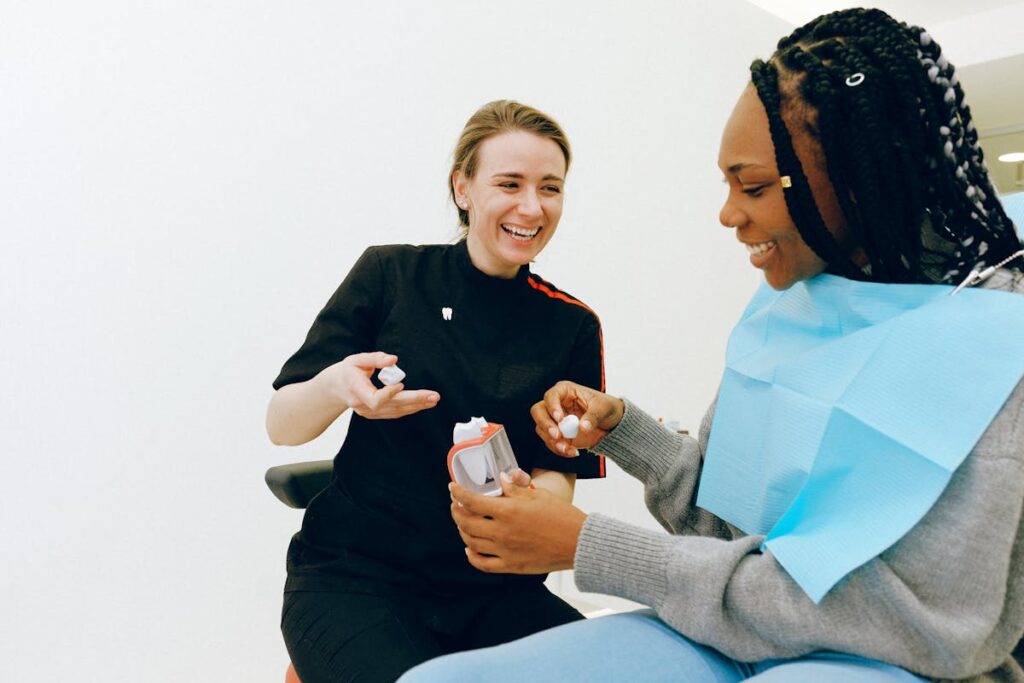
Dental crown selection remains a critical decision in restorative dentistry, with material choice directly impacting clinical outcomes. Modern prosthodontics offers diverse options ranging from traditional metal alloys to advanced ceramics, each presenting distinct mechanical properties and aesthetic characteristics. Factors including fracture resistance, marginal integrity, biocompatibility, and optical properties influence treatment planning. Understanding the comparative advantages of available crown materials enables ideal restoration selection based on specific clinical parameters and patient requirements.
Porcelain Crowns: Natural Aesthetics and Biocompatibility
Most dental professionals consider porcelain crowns the gold standard for anterior tooth restoration due to their superior light-handling properties that closely mimic natural tooth enamel. These all-ceramic restorations achieve ideal translucent appearance through their crystalline structure, which refracts and reflects light similarly to natural dentition. Modern porcelain systems enable minimal tooth preparation, preserving 1.0-1.5mm of tooth structure compared to traditional metal-ceramic alternatives requiring 2.0mm reduction.
Clinical studies demonstrate porcelain’s excellent biocompatibility, with gingival tissues exhibiting minimal inflammatory response. The material’s smooth surface inhibits bacterial adhesion, reducing plaque accumulation by 30-40% compared to metal-based restorations. Advanced CAD/CAM technology produces crowns with marginal gaps under 50 micrometers, ensuring long-term periodontal health. These characteristics make porcelain crowns particularly suitable for patients with metal allergies or aesthetic concerns in visible areas.
Metal Crowns: Maximum Durability and Longevity
Metal crowns demonstrate superior mechanical properties compared to other restorative materials, with compressive strength values exceeding 800 MPa and exceptional resistance to occlusal forces. Clinical studies report survival rates of 95% at 10 years and 87% at 15 years, considerably outperforming alternative crown materials in posterior applications. The high elastic modulus and fracture toughness of gold alloys and base metal compositions enable these restorations to withstand repetitive masticatory cycles without material fatigue or marginal breakdown.
Strength and Resistance
When structural integrity and long-term performance are paramount considerations in restorative dentistry, metal crowns demonstrate superior mechanical properties that distinguish them from alternative materials. These restorations exhibit enhanced durability through high tensile strength values ranging from 800-1400 MPa, dramatically exceeding ceramic alternatives. Metal alloys provide improved resistance against occlusal forces, withstanding bite pressures up to 700 pounds per square inch without fracturing.
Clinical studies document failure rates below 5% over 15-year periods for gold and base-metal crowns. Their inherent ductility prevents catastrophic failure, allowing gradual deformation rather than sudden fracture. Metal crowns maintain marginal integrity under cyclic loading conditions, resisting fatigue-induced microcracks. The homogeneous crystalline structure distributes stress uniformly, preventing localized failure points common in layered ceramic restorations.
Long-Term Performance
The exceptional mechanical properties of metal restorations translate directly into documented longevity that surpasses all other crown materials in clinical service. Clinical studies demonstrate average functional lifespans exceeding 20-30 years for properly fabricated metal crowns, with many cases documenting service beyond four decades. This superior long term durability stems from metal’s inherent resistance to fracture propagation, minimal wear rates, and stable marginal integrity over time.
Longevity considerations favor metal crowns particularly in posterior applications where masticatory forces concentrate. The material’s homogeneous structure prevents microcrack development that compromises ceramic restorations. Metal crowns exhibit negligible dimensional changes, maintaining ideal occlusal relationships throughout their service life. Retrospective analyses consistently rank metal restorations highest for survival rates, with failure modes typically involving secondary caries rather than structural compromise of the restoration itself.
Porcelain-Fused-to-Metal Crowns: Balancing Strength and Appearance
Porcelain-fused-to-metal (PFM) crowns consist of a metal substructure covered with layers of dental porcelain, combining the mechanical advantages of metal alloys with the aesthetic properties of ceramic materials. These restorations demonstrate flexural strength ranging from 600-800 MPa while maintaining acceptable esthetic appeal through ceramic veneering. The metal framework provides superior marginal adaptation and resistance to fracture under occlusal loads exceeding 500 Newtons.
Clinical studies report 94.7% survival rates at ten years for PFM restorations. However, biocompatibility concerns arise from potential galvanic reactions and metal ion release, particularly with nickel-chromium alloys. Gingival discoloration affects 12-15% of cases due to metal margin exposure. The opaque metal substructure necessitates minimum porcelain thickness of 1.5-2.0mm for adequate light transmission, requiring substantial tooth reduction. Contemporary PFM crowns utilize high-noble or titanium alloys to minimize allergic responses.
All-Ceramic and All-Porcelain Crowns: The Best Natural Color Match
How have all-ceramic restorations transformed modern restorative dentistry through superior optical properties and biomimetic characteristics? These crowns exhibit exceptional light transmission properties that replicate natural tooth structure, achieving seamless integration with adjacent dentition. Unlike metal-based alternatives, all-ceramic materials demonstrate natural luminescence through their translucent framework, allowing light diffusion patterns identical to enamel and dentin.
Contemporary ceramic systems, including lithium disilicate and zirconia variants, provide flexural strengths exceeding 400 MPa while maintaining ideal aesthetics. The absence of metal substructures eliminates gray margin discoloration and permits conservative tooth preparation of 1.0-1.5mm. Clinical studies demonstrate 95% survival rates at five years for posterior applications. Digital fabrication technologies enable precise marginal adaptation below 50 micrometers. These restorations prove particularly advantageous in anterior regions where aesthetic demands remain paramount.
Composite Resin Crowns: Budget-Friendly Temporary Solutions
Composite resin crowns represent the most economical option in dental restoration, typically costing 50-70% less than ceramic or metal alternatives while serving primarily as provisional restorations lasting 3-5 years. These crowns demonstrate ideal utility in pediatric dentistry, emergency treatments, and interim coverage during multi-stage implant procedures where temporary protection is required. Clinical limitations include reduced compressive strength (150-250 MPa compared to 400-900 MPa for ceramics), higher wear rates, and susceptibility to marginal discoloration, though their chairside fabrication capability and minimal tooth reduction requirements offer distinct procedural advantages.
Cost and Affordability
When budget constraints limit treatment options, composite resin crowns offer a cost-effective alternative ranging from $300 to $600 per unit, representing approximately 25-40% of the expense associated with ceramic or metal-based restorations. Manufacturing processes require minimal laboratory involvement, reducing overhead expenses and production timelines. Direct chairside fabrication eliminates multiple appointment fees and laboratory charges inherent in traditional crown procedures.
Cost considerations extend beyond initial investment. While composite resin demonstrates lower durability metrics—averaging 5-7 years versus 10-15 years for porcelain alternatives—the reduced upfront expenditure accommodates patients requiring immediate intervention. Dental practices frequently structure affordable payment plans to facilitate access, distributing expenses across 6-12 month periods without interest accumulation. Insurance coverage typically reimburses 50-80% of composite crown procedures when medically necessary, further reducing patient financial burden.
Ideal Use Cases
Pediatric dentistry applications represent the primary clinical indication for composite resin crowns, particularly in treating extensive carious lesions affecting primary dentition in patients aged 3-12 years. These restorations provide adequate structural integrity while maintaining ideal tooth structure preservation through conservative preparation protocols. Clinical studies demonstrate 85% success rates for anterior primary teeth restorations lasting until natural exfoliation.
Secondary applications include provisional restorations during complex rehabilitative procedures requiring ideal bite alignment verification before definitive prosthetic placement. Composite resin crowns serve as diagnostic tools in occlusal adjustment cases, allowing practitioners to assess patient adaptation over 3-6 month evaluation periods. Emergency dental scenarios benefit from immediate chairside fabrication capabilities, addressing acute fractures or failed restorations within single appointments. Contraindications include patients exhibiting parafunctional habits, insufficient coronal tooth structure, or subgingival margin requirements.
Pros and Cons
Why do practitioners increasingly select composite resin crowns despite their temporary nature? These restorations offer immediate aesthetic results at markedly lower costs than ceramic alternatives. Composite resin crowns require minimal tooth preparation, preserving dental structure while facilitating single-visit completion. Their translucency mimics natural enamel effectively for anterior applications.
However, treatment considerations reveal substantial limitations. Composite resin demonstrates inferior wear resistance, averaging 3-5 years longevity versus 10-15 years for ceramic crowns. Material porosity increases bacterial adhesion, elevating secondary caries risk. Fracture susceptibility restricts posterior applications where occlusal forces exceed material strength thresholds.
Patient preferences often favor composite resin for provisional restorations or financial constraints. The material’s reparability enables chairside adjustments without complete replacement. Nevertheless, clinical evidence indicates higher failure rates, necessitating informed consent regarding frequent replacement requirements and potential long-term costs surpassing initial savings.
Zirconia Crowns: Modern Technology for Superior Performance
Although ceramic materials have dominated restorative dentistry for decades, zirconia crowns represent a significant advancement in biomaterial engineering through their unique crystalline structure and mechanical properties. Modern manufacturing techniques, particularly computer-aided design and manufacturing (CAD/CAM), enable precise milling of monolithic zirconia restorations with margins accurate to 50 micrometers. The material’s tetragonal-to-monoclinic phase transformation provides crack-resistance mechanisms absent in traditional ceramics.
Zirconia demonstrates superior biocompatibility with minimal plaque accumulation and negligible cytotoxic effects on surrounding tissues. Clinical studies report 95.8% survival rates after five years, with flexural strength exceeding 900 MPa—significantly higher than lithium disilicate alternatives. The material’s radiopacity facilitates radiographic evaluation, while its low thermal conductivity reduces postoperative sensitivity. These characteristics establish zirconia as the preferred option for posterior restorations requiring maximum durability.
Gold Alloy Crowns: Traditional Excellence and Proven Reliability
While contemporary restorative materials continue to evolve, gold alloy crowns maintain their position as the benchmark for longevity in prosthodontic rehabilitation, with documented clinical success exceeding 50 years in numerous longitudinal studies. The exceptional corrosion resistance of high-noble gold alloys prevents degradation in the oral environment, eliminating galvanic reactions and maintaining structural integrity throughout decades of function.
Gold alloys demonstrate superior biocompatibility, producing minimal tissue inflammation and allergic responses compared to base-metal alternatives. The material’s malleability permits precise marginal adaptation, reducing microleakage and secondary caries incidence. Clinical data indicates wear rates compatible with natural enamel, preserving opposing dentition. Despite aesthetic limitations in anterior applications, gold alloy crowns remain indicated for posterior restorations requiring maximum durability, particularly in patients exhibiting parafunctional habits or limited interocclusal space.
Choosing the Right Crown Material for Your Specific Needs
The selection of crown material requires systematic evaluation of multiple clinical parameters, including residual tooth structure, occlusal forces, aesthetic demands, periodontal health, and patient-specific factors such as bruxism or xerostomia. Material strength considerations dictate metal-based restorations for posterior teeth experiencing maximum bite forces of 500-900 Newtons, while anterior restorations prioritize optical properties over mechanical resilience.
Clinical decision-making algorithms incorporate location-specific requirements: zirconia for molar regions requiring 1200 MPa flexural strength, lithium disilicate for premolar zones balancing durability with translucency, and feldspathic porcelain for incisors despite aesthetic limitations in matching natural fluorescence. Parafunctional habits necessitate monolithic constructions over layered alternatives. Subgingival margin placement favors biocompatible materials exhibiting minimal plaque accumulation. Cost-benefit analysis must consider longevity data: 94.7% survival for gold at fifteen years versus 84.4% for all-ceramic systems.
Frequently Asked Questions
How Many Dental Visits Are Required for Crown Placement?
The crown placement process typically requires two dental visits. Initial crown preparation considerations include tooth reduction, impression taking, and temporary crown fitting. The second appointment involves permanent crown cementation following laboratory fabrication and necessary adjustments.
Can Dental Crowns Be Whitened After Installation?
Dental crowns cannot be whitened post-installation. Appearance maintenance considerations require selecting appropriate shade initially. Proper dental care requirements include professional cleaning to remove surface stains. Porcelain and ceramic crowns maintain color stability through clinical-grade materials.
What Is the Typical Recovery Time After Getting a Crown?
Recovery following crown placement typically requires 24-72 hours for initial sensitivity resolution. Crown adjustment duration varies individually, with complete adaptation occurring within two weeks. Proper dental hygiene post procedure accelerates healing and promotes ideal crown integration.
How Much Do Different Types of Dental Crowns Cost?
Dental crown costs range from $800-$3,000 per unit. Cost effective alternatives include metal alloys ($800-$1,400) and composite resin ($800-$1,100). Durable materials used in premium options include porcelain-fused-to-metal ($1,000-$2,000) and all-ceramic crowns ($1,500-$3,000).
Will Insurance Cover My Dental Crown Procedure?
Insurance coverage options typically reimburse 50-80% for medically necessary crowns, contingent upon policy specifications. Patients should verify pre-authorization requirements, annual maximums, and deductibles. Financial assistance programs through dental schools or community health centers offer reduced-fee alternatives.