
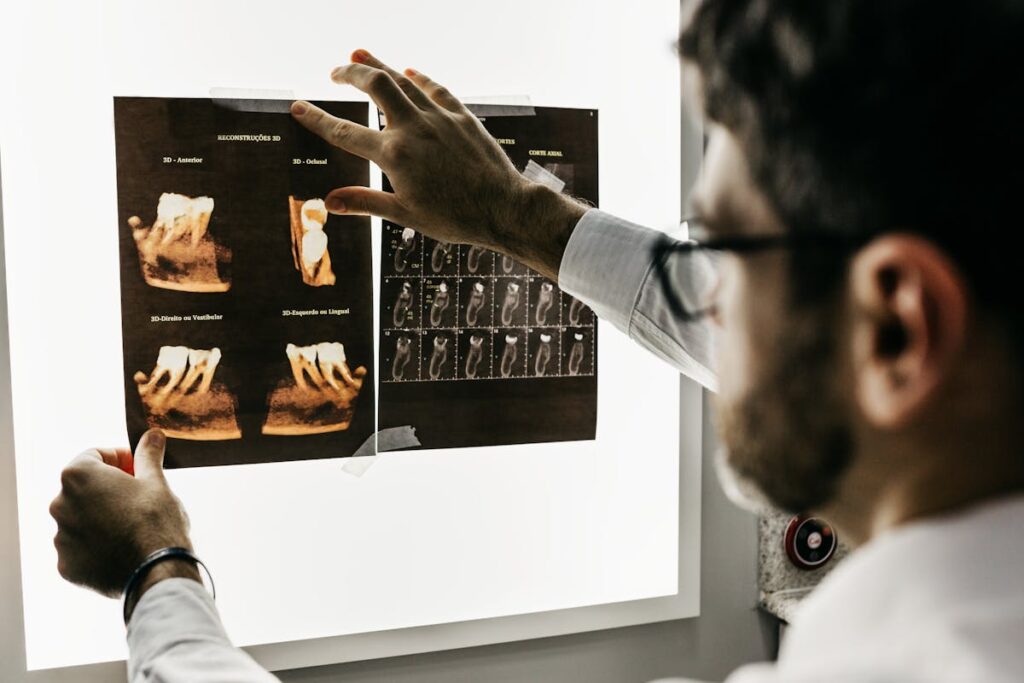
Parents often worry when their child needs dental X-rays. Modern dental imaging uses minimal radiation that experts consider safe for children. Digital technology has transformed pediatric dental care, reducing exposure levels considerably. Safety protocols protect young patients during every procedure. Understanding the facts about radiation doses, protective measures, and medical necessity helps families make confident decisions. The complete picture of dental X-ray safety reveals surprising comparisons that put these concerns into perspective.
Understanding Radiation Exposure in Pediatric Dental X-Rays
Modern dental X-rays expose children to remarkably low levels of radiation, typically measuring between 0.005 and 0.01 millisieverts for a single intraoral image. This amount equals approximately one day of natural background radiation from environmental sources. Dental professionals follow strict protocols to maintain ideal dosage levels through digital imaging technology, which reduces radiation by up to 90% compared to traditional film X-rays.
Pediatric patients receive customized exposure settings based on their size and age. Lead aprons and thyroid collars provide additional protection. The American Dental Association emphasizes that diagnostic benefits far outweigh minimal risks when X-rays detect hidden cavities or developmental issues. Parents should track their child’s lifetime radiation exposure by maintaining dental records, though routine dental imaging contributes negligibly to cumulative totals.
How Modern Digital Technology Reduces Radiation Risks
Digital radiography has transformed pediatric dental imaging through advanced sensors that capture images with markedly less radiation than conventional methods. These digital radiography advancements reduce radiation exposure by up to 90% compared to traditional film X-rays. The innovative sensor technology requires only milliseconds of exposure time, minimizing the radiation dose children receive during dental examinations.
Modern digital systems feature automatic exposure controls that adjust radiation levels based on each child’s size and the specific diagnostic need. The sensors’ heightened sensitivity means dentists can obtain clear, detailed images using the lowest possible radiation settings. Additionally, digital images appear instantly on computer screens, eliminating the need for retakes due to processing errors common with film. These technological improvements make today’s pediatric dental X-rays safer than ever before while maintaining exceptional diagnostic quality.
Safety Protocols and Protective Measures During X-Ray Procedures
Dental practices implement multiple protective measures to minimize radiation exposure during pediatric X-rays. Lead aprons shield the child’s body from scatter radiation, reducing exposure to essential organs by up to 90 percent. Thyroid collars provide additional protection for the neck area, which is particularly important since children’s thyroid glands are more sensitive to radiation than those of adults.
Lead Apron Protection
While lead aprons have traditionally been standard practice during dental X-rays, current guidelines from the American Dental Association and FDA indicate these protective garments are no longer routinely necessary for most pediatric dental imaging. Modern digital X-ray equipment produces minimal scatter radiation, making lead apron thickness of 0.25mm less critical for radiation absorption than previously believed.
The focused beam technology in contemporary dental X-ray machines directs radiation precisely at the targeted area, drastically reducing exposure to other body parts. Studies demonstrate that thyroid collars provide more relevant protection for children, as the thyroid gland shows greater sensitivity to radiation than areas covered by traditional aprons.
Dental offices may still offer lead aprons for parental reassurance, though scientific evidence supports their optional use with current technology.
Thyroid Collar Usage
The thyroid gland in children requires special consideration during dental X-rays due to its heightened radiation sensitivity compared to adult tissue. Research shows that proper thyroid protection considerably reduces radiation exposure to this vulnerable area by up to 50%.
Dental professionals guarantee correct collar positioning by placing the lead-lined shield snugly around the child’s neck before X-ray exposure. The collar should sit comfortably without gaps while covering the entire thyroid area from the chin to the collarbone. Modern thyroid collars weigh less than older models, making them more comfortable for young patients.
Current guidelines recommend thyroid collar use for all pediatric dental X-rays unless it interferes with the diagnostic image quality. Most dental offices now include thyroid collars as standard protective equipment alongside lead aprons.
When Dental X-Rays Are Necessary for Children
Although routine dental care focuses on prevention, certain situations require X-rays to properly diagnose and treat oral health issues in pediatric patients. Dentists recommend X-rays when children present symptoms like tooth pain, facial swelling, or signs of infection that cannot be evaluated through visual examination alone. X-rays become essential for detecting cavities between teeth, examining permanent tooth development beneath the gums, and evaluating jaw growth patterns.
The American Academy of Pediatric Dentistry suggests X-ray frequency based on individual risk factors rather than predetermined schedules. High-cavity-risk children may need X-rays every six months, while those receiving regular fluoride treatments and dental sealants with no decay history might require them less frequently. Orthodontic evaluations and trauma assessments also necessitate radiographic imaging for accurate treatment planning.
Comparing Dental X-Ray Radiation to Everyday Exposure Sources
Modern dental X-rays expose children to remarkably small amounts of radiation compared to natural background sources encountered daily. A single digital dental X-ray delivers approximately 0.005 millisieverts of radiation, while children absorb 3 millisieverts annually from background radiation levels through cosmic rays, soil, and food.
To contextualize further, one dental X-ray equals roughly half a day’s worth of natural exposure. A cross-country airplane flight exposes passengers to more radiation than a full dental X-ray series. Even eating bananas contributes to radiation exposure due to naturally occurring potassium-40.
The diagnostic radiation benefits far exceed minimal risks. Detecting cavities, monitoring tooth development, and identifying hidden infections early prevents serious complications. Dentists carefully weigh these advantages against exposure, ensuring X-rays occur only when clinically necessary for ideal oral health outcomes.
Age-Appropriate Guidelines and Frequency Recommendations
Professional dental organizations have established clear guidelines for when children should receive their first dental X-rays and how often they should be repeated based on individual needs. Most dentists recommend initial X-rays between ages 5-6 when permanent teeth begin developing, with follow-up intervals ranging from six months to two years depending on the child’s cavity risk. Factors such as previous dental history, oral hygiene habits, and dietary patterns help dentists determine the appropriate screening schedule for each child rather than applying a one-size-fits-all approach.
First X-Ray Timing
When children visit the dentist for routine checkups, parents often wonder about the right age for their child’s first dental X-ray. The American Academy of Pediatric Dentistry recommends that appropriate timing depends on individual risk factors rather than a specific age. Most dentists suggest the first X-rays between ages 4-6 when permanent molars begin developing beneath the gums.
For children with no visible decay and low cavity risk, initial X-rays may wait until age 6-7. However, those with higher risk factors—such as visible cavities, crowded teeth, or difficulty with visual examinations—may need earlier imaging. The ideal frequency following the first X-ray varies: high-risk children typically require X-rays every 6 months, while low-risk patients may only need them every 12-24 months.
Recommended Screening Intervals
After establishing when children should receive their first dental X-rays, understanding the appropriate screening intervals becomes important for ongoing oral health monitoring. The American Academy of Pediatric Dentistry provides evidence-based guidelines for screening frequency based on individual cavity risk assessment.
For children with low cavity risk and no visible dental problems, bitewing X-rays are typically recommended every 12-24 months. Those at higher risk may need X-rays every 6-12 months. Panoramic X-rays, which show the entire mouth structure, are generally taken once every 3-5 years during developmental years.
Dentists determine recommended intervals by evaluating factors including diet, oral hygiene habits, previous cavity history, and fluoride exposure. This personalized approach guarantees children receive necessary diagnostic imaging while minimizing radiation exposure, balancing thorough monitoring with safety considerations.
Risk Assessment Factors
Because children’s cavity risk changes as they grow and develop, dental professionals evaluate multiple factors to determine appropriate X-ray frequency for each age group. Key assessment criteria include cavity history, dietary habits, oral hygiene practices, and fluoride exposure. Children with previous cavities or visible plaque buildup may require more frequent imaging than those with excellent oral health.
Dentists minimize radiation dosage levels through modern digital sensors and protective lead aprons. Proper patient repositioning techniques guarantee accurate images on the first attempt, avoiding retakes. Age-specific protocols guide decision-making: toddlers rarely need X-rays unless trauma occurs, while teenagers approaching orthodontic treatment may require thorough imaging. Individual risk profiles ultimately determine timing rather than rigid schedules, allowing dentists to balance diagnostic benefits against radiation exposure for each child’s unique situation.
Special Considerations for Children With Developmental Needs
While most children tolerate dental X-rays well, those with developmental needs may require modified approaches to guarantee both safety and comfort during the imaging process. Children with sensory processing considerations may find the X-ray equipment overwhelming due to unfamiliar sounds, textures, or positioning requirements. Dental teams can accommodate these needs through gradual desensitization, allowing extra time, and using weighted blankets or noise-reducing headphones.
Communication challenges require alternative strategies for obtaining cooperation. Visual schedules, social stories, and demonstration videos help prepare children for the procedure. Some practices offer familiarization visits where children can explore equipment without pressure. When traditional X-rays prove impossible, dentists may recommend panoramic imaging, which requires less mouth manipulation. Parents should discuss their child’s specific needs with the dental team beforehand to develop an individualized approach that maintains diagnostic quality while respecting comfort levels.
Making Informed Decisions About Your Child’s Dental Imaging
Understanding a child’s individual needs forms the foundation for broader decision-making about dental imaging. The informed consent process empowers parents to make confident choices by guaranteeing they receive clear explanations about why specific X-rays are recommended, their benefits, and any associated risks. Dentists should present this information in accessible language, avoiding technical jargon.
Effective parental communication strategies include asking questions about radiation doses, frequency of imaging, and available alternatives. Parents should feel comfortable requesting detailed explanations about their child’s specific dental condition and how imaging supports treatment planning. Research shows that when parents actively participate in these discussions, they report greater satisfaction with care decisions.
Documentation of these conversations helps maintain transparency and confirms all parties understand the rationale behind imaging recommendations for each child’s unique situation.
Frequently Asked Questions
Will My Child Feel Pain During Dental X-Rays?
Children typically experience no pain during dental X-rays. Modern technique adjustments guarantee comfort while minimizing radiation exposure levels. The process involves simply biting on a small sensor or film holder for a few seconds.
Can Pregnant Teenagers Safely Receive Dental X-Rays?
Pregnant teenagers should avoid routine dental x-rays due to fetal development concerns. However, emergency dental x-rays with proper shielding pose minimal radiation exposure risks. Dentists use protective aprons and take necessary precautions when treatment cannot wait.
Do Dental X-Rays Affect Baby Teeth Differently Than Permanent Teeth?
Dental X-rays don’t affect baby teeth differently than permanent teeth. Modern equipment uses minimal radiation that doesn’t disrupt baby tooth development or enamel formation. Both tooth types respond identically to properly administered diagnostic imaging procedures.
What if My Child Gags or Can’t Hold Still During X-Rays?
Dentists use distraction techniques like counting games and child-friendly x-ray equipment with smaller sensors for gagging children. They’ll work patiently, take breaks, and may postpone if needed. Most children successfully complete x-rays with gentle encouragement.
Are Dental X-Rays Covered by Most Children’s Dental Insurance Plans?
Most children’s dental insurance plans cover routine x-rays as preventive care. Dental plan coverage details vary, but typically include annual bitewings. Parents should verify their specific benefits, as the cost of pediatric dental x-rays differs between providers.